Buyers evaluating this material usually have the same questions: What does "SG" actually mean? How does it differ from grey or FG iron? Will a given grade hold up under a specific load or pressure? And how do you confirm a foundry actually delivered what the drawing called for?
This guide covers the microstructure behind ductile iron's strength, the standards that define its grades, the manufacturing and inspection controls that determine whether a casting meets spec, common applications, and what US manufacturers should look for when sourcing production overseas.
Key Takeaways
- Graphite shape, not presence, sets ductile iron apart from grey iron and drives toughness and fatigue resistance.
- ASTM A536 grades like 65-45-12 set minimum tensile, yield, and elongation—not guaranteed performance throughout a casting.
- Matrix structure (ferritic, pearlitic, or a blend) determines whether a grade favors strength or ductility.
- Verify nodularity, hardness, and chemistry against the purchase spec—not the material name alone.
- Sourcing success depends as much on foundry process control and documentation as on the alloy itself.
What Are Ductile SG Iron Castings?
What SG Iron Means
SG iron stands for spheroidal graphite iron, also called ductile iron or nodular cast iron. The "SG" refers to the shape the graphite takes inside the iron matrix: small, rounded nodules instead of interconnected flakes.
It belongs to the cast iron family, not steel. Engineers specify it when a part needs castability plus strength, ductility, toughness, and machinability in one package—properties grey iron can't deliver together.
How the Microstructure Creates Ductility
Flake graphite in grey iron behaves like a network of built-in cracks. Each flake tip concentrates stress, giving cracks an easy starting point under tension, impact, or repeated loading.
Spheroidal graphite removes most of that sharp-edge effect. Rounded nodules spread stress more evenly through the matrix, which is why ASM International's reference on ductile irons identifies graphite shape, not the presence of graphite itself, as the defining factor behind ductile iron's improved crack resistance.

The surrounding metallic matrix matters just as much:
- Ferritic matrix – higher ductility and impact resistance, softer and easier to machine
- Pearlitic matrix – higher strength and hardness, lower elongation
- Ferritic-pearlitic blend – a working compromise between the two
- Heat-treated structures – used to push properties further (for example, austempered ductile iron for wear and fatigue)
Composition and Nodularization
Foundries control carbon, silicon, manganese, sulfur, phosphorus, and residual elements to support nodule formation and a sound matrix. No single composition covers every grade. The applicable material standard—not a generic recipe—should govern chemistry targets.
To form the nodules, foundries:
- Treat molten iron with magnesium (or another approved nodularizer)
- Inoculate to encourage graphite nucleation before pouring
- Control treatment timing and technique, which directly affect nodularity
Standards and Grade Designations
| Standard | Example grade designations |
|---|---|
| ASTM A536-24 | 60-40-18, 65-45-12, 80-55-06, 100-70-03 |
| ISO 1083:2018 | ISO 1083/JS/450-18 |
| EN 1563:2018 | EN-GJS-350-22, EN-GJS-400-18, EN-GJS-500-7 |
ASTM's numbering is easy to read at a glance. In 65-45-12, the three numbers are minimum tensile strength (ksi), minimum yield strength (ksi), and minimum elongation (percent).
Grades are not interchangeable across standards without checking the current edition. The drawing, purchase specification, pressure rating, and testing requirements should control final grade selection—not a name alone.
SG Iron Properties and Material Selection
Mechanical and Functional Properties
SG iron generally delivers higher tensile strength, yield strength, elongation, impact resistance, and fatigue performance than typical grey iron. Actual results depend on the grade specified, section thickness, matrix structure, heat treatment, and test method used.
Representative ASTM A536 minimums (verify against your purchased edition):
| Grade | Tensile (ksi) | Yield (ksi) | Elongation (%) |
|---|---|---|---|
| 60-40-18 | 60 | 40 | 18 |
| 65-45-12 | 65 | 45 | 12 |
| 80-55-06 | 80 | 55 | 6 |
| 100-70-03 | 100 | 70 | 3 |

Beyond raw strength, other functional traits that often matter in service include:
- Machinability
- Wear behavior
- Vibration damping
- Thermal behavior
- Pressure tightness
- Dimensional stability
These are general tendencies, not guarantees for every part. A casting's actual performance still depends on how it was poured, treated, and inspected.
FG Versus SG Cast Iron
| Criterion | FG / Grey Iron | SG / Ductile Iron |
|---|---|---|
| Graphite form | Flake | Spheroidal |
| Ductility | Low | Moderate to high |
| Impact resistance | Low | Moderate to high |
| Fatigue response | Weaker (flake tips concentrate stress) | Stronger |
| Vibration damping | Generally better | Generally lower |
| Machinability | Often favorable | Depends on matrix |
| Pressure capability | Limited | Broader, with qualified grades |
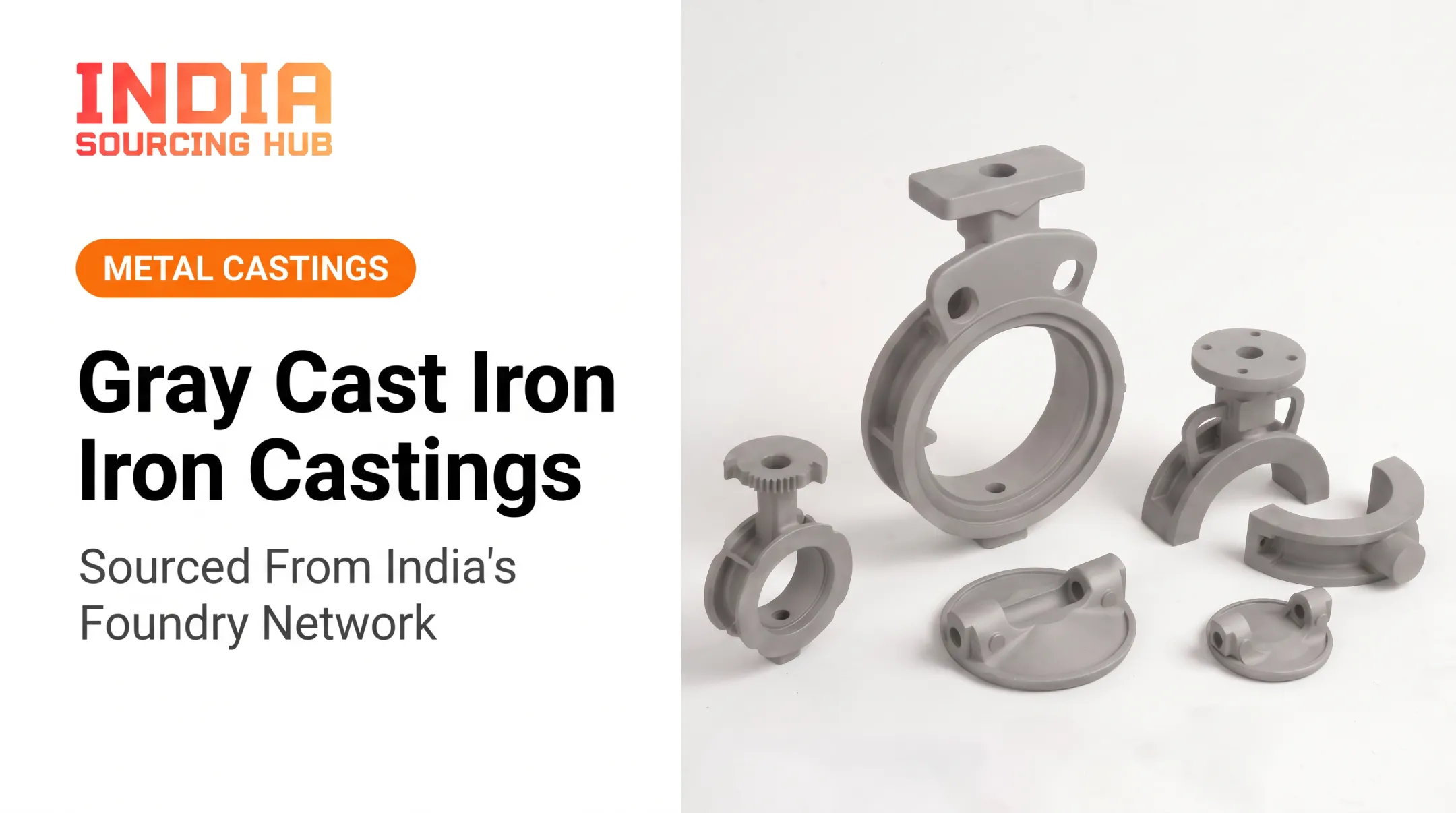
SG iron is generally stronger and more damage-tolerant than FG or grey iron. That said, "stronger" doesn't mean a given grade automatically suits every temperature, wear, corrosion, or fatigue condition.
Pressure-retaining applications, for instance, need a specification like ASTM A395 behind the material choice, not just the "ductile iron" label.
When SG Iron May Replace Steel — and When It May Not
Ductile iron can reduce weight, machining time, and manufacturing cost compared with a cast steel part, provided the substitution goes through proper design validation and safety-factor review.
It's not a universal swap. Watch for:
- Brittle behavior outside the grade's validated temperature range
- Sensitivity to casting defects like microshrinkage or degenerate graphite
- Weld repair restrictions, since repairs can introduce porosity or brittle local zones
- Corrosion or elevated-temperature requirements that need a specific specification
- Pressure-containing or safety-critical designs that demand independent validation
Material-Selection Checklist
Before locking in a grade, evaluate:
- Load direction and whether it's static or cyclic
- Shock or impact exposure
- Operating pressure and temperature
- Wear and corrosion conditions
- Section thickness and machining allowance
- Surface finish and expected service life
Confirm the selection with engineering calculations, applicable codes, prototype or first-article testing, and supplier documentation before releasing a part to production.
How SG Iron Castings Are Manufactured and Verified
Typical Production Sequence
- Review the drawing, pattern, and tooling requirements
- Prepare the mold and the metal charge
- Melt the iron and run chemical analysis
- Treat with magnesium and inoculate
- Pour at a controlled temperature
- Allow solidification and cooling
- Shake out, fettle, and heat-treat as required
- Machine, inspect, and ship

Final properties hinge on a few process controls:
- Pouring temperature and treatment timing
- Residual magnesium and inoculation practice
- Cooling rate and section thickness
These drive nodularity, shrinkage risk, matrix formation, and mechanical performance. Skip a step and the shortfall shows up in properties, not just cosmetics.
Casting Design and Defect Prevention
Good casting design reduces defect risk before metal ever gets poured. Design for uniform wall thickness, fillets, draft angles, core placement, risers, gating, and feeding paths that eliminate hot spots.
Common defects and what causes them:
- Porosity and shrinkage – inadequate feeding or poor gating design
- Inclusions – contaminated melt or poor mold cleanliness
- Misruns and cold shuts – pouring temperature or flow issues
- Inadequate nodularity – magnesium fade or insufficient inoculation
Quality Verification
Core verification against the purchase specification usually includes:
- Chemical analysis
- Tensile and hardness testing
- Metallographic examination
- Nodularity or nodule-count checks
ASTM A247 covers qualitative graphite classification. Quantitative nodularity needs a separate image-analysis practice.
Part risk drives extra checks such as dimensional and surface inspection, pressure testing, magnetic particle testing, ultrasonic testing, or radiography. Not every method applies to every casting. A low-pressure housing does not need the same NDT package as a safety-critical pressure vessel.
Documentation and Acceptance
Define these before production starts:
- Material standard and grade
- Heat or batch traceability
- Inspection plan and test certificates
- Drawings with current revisions
- Dimensional and NDT reports
- Heat-treatment records
- Nonconformance procedures
A certificate alone doesn't replace an agreed inspection plan, drawing review, sampling approach, and independent or supplier-managed verification where the application warrants it.
Applications and Design Considerations
Common Industrial Applications
SG iron is used across pressure, impact, and wear-driven applications:
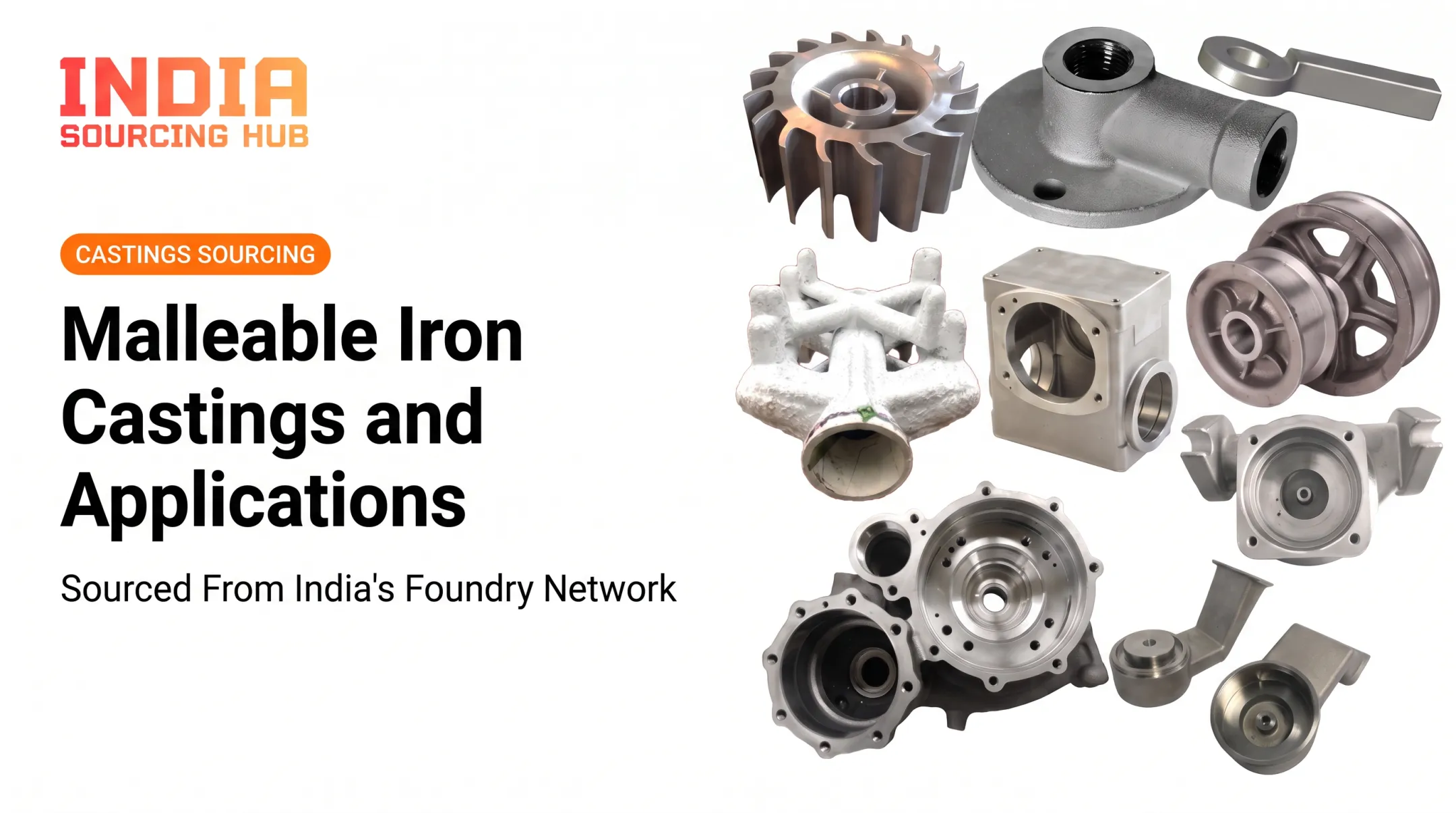
- Pump and valve bodies, impellers, volutes – pressure tightness and fatigue resistance
- Valve stems and balls – wear resistance and dimensional stability
- Pipe and pressure-related components – pressure capability under qualified grades
- Automotive and truck parts, gears – impact and cyclic fatigue resistance
- Agricultural and construction equipment housings – toughness under shock loading
Design and Machining Considerations
Review these factors before quoting or cutting tooling:
- Wall thickness and core placement
- Shrinkage allowances and machining stock
- Datum strategy, tolerances, and surface finish
- Fixturing, especially on irregular geometries
Fully machined parts need coordinated control across:
- Casting quality and machining capability
- Inspection datums and burr removal
- Corrosion protection, packaging, and part identification
Handle these as one controlled process rather than separate sign-offs.
Selecting the Right Manufacturing Route
Sand casting remains the common route for SG iron. Alternatives still matter when geometry, size, volume, tooling budget, or surface finish needs change.
No single route fits every part. Let a technical review of the drawing, 3D model, annual demand, and performance requirements drive the choice—not a default process assumption.
Sourcing SG Iron Castings for US Manufacturing
What US Buyers Should Include in an RFQ
A meaningful quote needs:
- 2D drawings and 3D models
- Material grade or performance requirement
- Annual and release quantities
- Prototype expectations and machining scope
- Tolerances, testing, and coating requirements
- Packaging, delivery terms, and destination
Defining minimum order quantities, tooling ownership, sample approval, and engineering-change control upfront prevents a lot of back-and-forth once production starts.
Supplier Qualification and Supply-Chain Controls
Evaluate a foundry before you commit. Check:
- Process capability and metallurgical controls
- Traceability and inspection resources
- Corrective-action process
- Export experience
A documented first-article or sample-approval process, pre-shipment inspection, and a clear nonconformance procedure matter more than a sales pitch.
Tariff exposure belongs in the same review. Classification determines duty rates, not product category alone, and exclusions apply to specific HTS subheadings rather than entire product lines.
The USTR's 2025 extension of Section 301 exclusions pushed 178 identified exclusions out to November 2026. China-origin sourcing decisions need current, product-specific verification rather than assumptions.
India Sourcing Hub's Relevant Support
India Sourcing Hub works as a North American sourcing partner connecting US manufacturers with Indian metal-product suppliers, coordinating technical requirements, quality expectations, import logistics, and delivery along the way.
Capabilities that matter for SG iron casting programs:
- Metal-product sourcing experience dating back to 1995
- Indian supplier network built for stringent quality requirements since 2013
- Warehousing in Chicago, Toronto, and Rajkot to ease MOQ pressure
- Third-party factory inspection built into supplier qualification
- India-based engineers inspecting production runs before shipment
None of this substitutes for confirming the specific grade, certification, and test documentation your drawing requires. It does mean the groundwork for a reliable supply relationship—factory vetting, quality oversight, and logistics management—is already in place.
Conclusion
Ductile SG iron castings earn their place in demanding applications because of one structural fact: nodular graphite instead of flakes. That shift in shape delivers a practical balance of castability, strength, ductility, toughness, and machinability that gray iron can't match.
The decision path from there is straightforward:
- Match grade and matrix to actual operating conditions
- Validate the casting process and inspection plan against your specification
- Assess supplier capability, landed cost, inventory needs, and delivery risk before committing volume
If you're evaluating a drawing or casting requirement and want a technical sourcing review, share the details with India Sourcing Hub's team. No guaranteed quote, just an honest look at what the part needs and what it would take to deliver it.
Frequently Asked Questions
What is SG casting?
SG casting refers to spheroidal graphite (ductile) iron casting, where graphite forms as rounded nodules instead of flakes. This structure gives it higher ductility, toughness, and impact resistance than conventional gray iron castings.
What is the difference in strength between FG and SG cast iron?
SG iron generally offers higher tensile strength, ductility, toughness, and impact resistance than flake graphite (FG) or gray iron. Always compare verified grades under the relevant standard rather than assuming one material family is universally stronger.
What is the difference between SG iron and ductile iron?
SG iron, spheroidal graphite iron, nodular iron, and ductile iron are different names for the same material family. Specific properties still depend on the grade and standard specified on the drawing.
How is ductile SG iron made?
Production starts with melting, chemical control, magnesium-based nodularization, inoculation, mold pouring, and solidification. Finishing, heat treatment when required, and inspection follow—each step affects whether the final part meets its mechanical targets.
How do I choose the right SG iron grade for a casting?
Consider load, pressure, temperature, wear, fatigue, section thickness, and machinability against the applicable standards and required testing. Work with your design engineer and a qualified foundry or sourcing partner to confirm the choice before production.