This guide is written for US-based engineers, product designers, OEM buyers, and sourcing teams who need to evaluate slender, high-precision parts for production. Understanding how Swiss machining actually works affects dimensional accuracy, repeatability, unit cost, lead time, and which supplier can realistically deliver what your drawing demands.
We'll cover how the machine operates, which applications make sense, what materials and design choices matter, where the process runs into limits, and how to think about sourcing a qualified Swiss machining partner.
Key Takeaways
- Swiss turning supports bar stock close to the cutting zone, reducing deflection on long, slender parts
- Modern Swiss-type lathes combine turning, drilling, milling, and threading in one automated cycle
- The process pays off most on small-diameter, precision-critical parts at medium-to-high volumes
- Material grade, bar quality, and tolerance requirements all drive cost and feasibility
- Short, thick, or simple parts often run cheaper on a conventional CNC lathe
What Is CNC Swiss Screw Machining?
CNC Swiss screw machining, also called Swiss turning or Swiss-type CNC machining, describes bar-fed precision turning performed on a sliding-headstock lathe. The goal is straightforward: produce consistent, often multi-feature cylindrical parts with tight dimensional control and little to no secondary handling.
The core difference from a conventional CNC lathe comes down to motion. On a standard lathe, the workpiece sits in a fixed chuck while tools move to it. On a Swiss-type machine, the bar itself moves axially through a guide bushing, and cutting happens right at that supported section as Star GB explains.
That support is what lets the machine hold tight tolerances on parts that would otherwise flex or chatter under the tool.
Not every sliding-headstock job actually uses a guide bushing, though. Shorter or stockier parts sometimes skip it entirely, since the added setup work isn't worth it for every geometry.
Swiss-Type Lathes vs. General Screw Machines
A "CNC screw machine" is a broad category. A Swiss-type CNC lathe is a specific, modern variant that typically adds:
- Automatic bar feeding for continuous, unattended production
- Multiple tool stations running simultaneously or in sequence
- Live tooling for off-axis drilling and milling
- A sub-spindle or back-working spindle for second-side operations
Don't assume every Swiss machine shares the same capability envelope. Citizen's own R01/04 brochure lists maximum machining diameters of just 1 mm and 4 mm for those two specific models, illustrating parts as small as 0.3 mm in diameter according to Citizen's 2026 specifications. Those are model-specific numbers, not a universal Swiss machining limit.
Achievable tolerance, diameter range, and cycle time all depend on the machine, material, part geometry, and tooling. Ask your supplier for capability data tied to your actual drawing.
How CNC Swiss Screw Machining Works
The process runs as one continuous, programmed cycle from raw bar to finished part. Bar stock loads into a feeder, advances through the guide bushing, gets machined in supported sections, and exits as a complete component after parting off.
The guide bushing is the detail that makes this possible. It supports the bar immediately behind where the tool is cutting, which shrinks the unsupported length that would otherwise bend or vibrate under load, as Tsugami America describes in its Swiss advantage overview. Less deflection means tighter tolerances on long, thin features that a conventional lathe would struggle with.
Meanwhile, the sliding headstock advances and retracts the bar through that bushing, exposing new sections for machining while keeping the cut supported throughout.
The main spindle rotates the stock, and tool stations positioned around it handle turning, facing, grooving, threading, and drilling, often several at once. Machines equipped with live tooling and a sub-spindle can also mill flats, cross-drill holes, and finish the back end of the part without a manual re-fixture.

Step 1: Material Preparation and Setup
Before any cutting starts, the shop:
- Selects the alloy or plastic specified on the drawing
- Confirms bar diameter, straightness, and surface condition
- Chooses a guide bushing sized to that bar (or confirms a bushing-free setup)
- Loads the bar feeder and aligns tooling to the print
Bar quality matters more than most buyers expect. Diameter and concentricity variation in the raw stock changes how the bar fits the bushing, which can show up as dimensional drift in finished parts.
Step 2: The Primary Machining Cycle
Once running, the bar rotates and advances axially while tools cut in sequence or simultaneously, depending on the program. Chip control, coolant delivery, and tool-wear monitoring all run alongside the cut. Some materials, like unleaded brass, tend toward long, tangled chips that require specific tool geometry to manage cleanly.
Step 3: Cutoff and Finishing
The finished section parts off from the bar, sometimes transferring to a sub-spindle for back-side operations first. After ejection, parts typically go through deburring and dimensional inspection against the drawing before packaging.
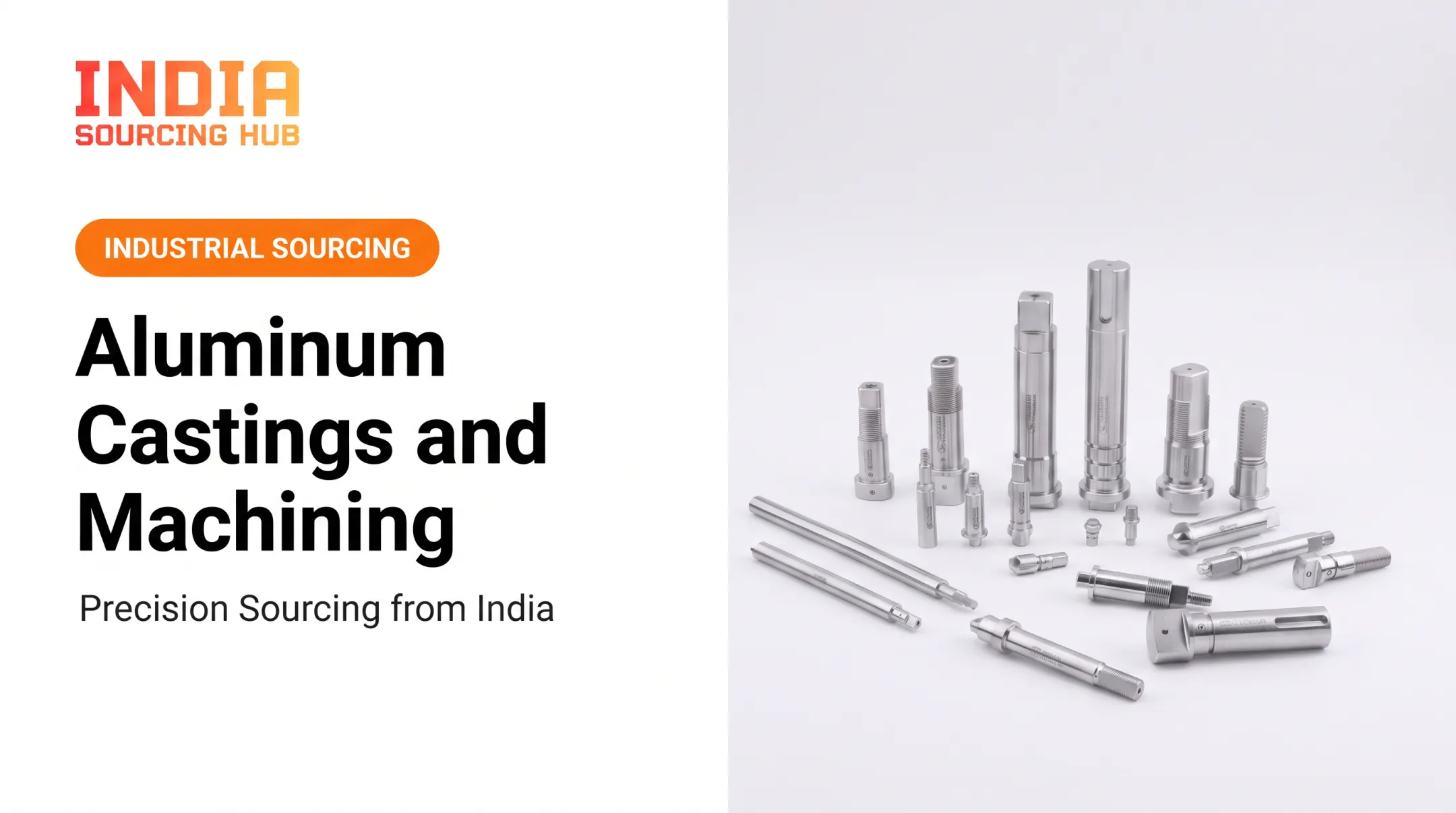
A simple example: a small threaded pin might get turned to diameter, grooved, threaded, cross-drilled, and parted off in one continuous cycle, with no manual handling between operations. That single-cycle path is what makes Swiss turning efficient for complex small parts.
Applications and Selection Factors
Swiss machining shows up across industries where parts are small, slender, and need to repeat precisely, run after run.
| Sector | Typical parts | What drives the fit |
|---|---|---|
| Medical devices | Probe pins, bone screws, catheter components | Tight tolerances, biocompatible materials, miniature features |
| Automotive/truck | Valve stems, pins, shafts | High-volume repeatability, moderate complexity |
| Electronics | Connector contacts, sensor housings | Small diameters, multiple axial features |
| Pumps and valves | Valve stems, fittings, pistons | Bore precision, chip evacuation on deep drilling |
One documented case from Modern Machine Shop shows the cycle-time payoff. Challenge Machine moved a PEEK knee-replacement component from a two-machine process (45 minutes plus 15 minutes) onto a single Swiss-type lathe, cutting the sequence to about 15 minutes. That's one shop's result on one part, not a guaranteed savings figure, but it shows what consolidating operations can do.

Main Selection Criteria
Swiss turning tends to make the most sense when a part has:
- A small diameter paired with a high length-to-diameter ratio
- Tight functional tolerances on multiple features
- Repeated production demand, not a one-off prototype
- Several axial features (grooves, threads, cross-holes) that would otherwise need separate setups
Material Considerations
Material choice affects tool wear, heat generation, and chip behavior just as much as it affects part strength:
- Stainless steel work-hardens quickly and can produce long, difficult chips
- Titanium damages cutting edges fast if turning speed runs too high
- Brass (especially unleaded grades) tends toward long, tangled chips without the right tool geometry
- Aluminum and copper alloys generally machine easily but still need chip-forming tool designs
- Engineering plastics like PEEK machine cleanly but need careful feed control to avoid melting at the cut
DFM Guidance Before You Commit
A few design choices make a measurable difference in cost and yield:
- Flag only the dimensions that are functionally critical, not everything on the print
- Avoid unnecessarily tight tolerances on non-mating surfaces
- Confirm tool access for every feature, especially cross-holes and back-side details
- Minimize unsupported slender sections where possible
- Specify material condition and heat treatment clearly
- Get supplier feedback before locking in production programming
Sourcing a Swiss machining partner means verifying more than a machine list. Ask for sample parts, inspection documentation, material traceability, and evidence of repeatability across runs, not just a quote.
India Sourcing Hub works with North American manufacturers evaluating overseas suppliers for this kind of part. It coordinates technical requirements, quality expectations, and import logistics, and its factory selection process includes third-party inspection. Engineers review production runs before parts ship, which matters when tolerances are measured in thousandths.
Common Issues and When Swiss Machining Is Not Appropriate
Swiss machining is not automatically the right call for every precision part. "Tight tolerance" isn't a universal machine promise, and a Swiss machine isn't just a faster conventional lathe.
Common process risks include:
- Inconsistent bar diameter throwing off guide-bushing fit
- Chip accumulation on long-chipping materials such as stainless steel
- Tool wear and thermal drift during long runs
- Incorrect tool offsets that go unnoticed without in-process checks
- Insufficient inspection planning for multi-feature parts
Swiss turning also carries real cost and setup overhead. Programming is more complex, tooling is specialized, and bar-stock requirements add preparation steps that a simple job may not need. For short runs, that overhead can outweigh any precision benefit.
When an Alternative Makes More Sense
- Conventional CNC turning for short, thick, large-diameter parts
- CNC milling when the part is predominantly prismatic, not cylindrical
- Larger-capacity lathes for diameters beyond a given Swiss machine's range
- Conventional shop methods for low-volume prototypes where setup amortization doesn't pencil out
Before committing, compare total landed cost, not just machine rate. Factor in setup amortization, secondary operations, and whether Swiss machining actually improves functional performance or just adds precision nobody asked for.
Conclusion
CNC Swiss screw machining combines a sliding headstock, guide bushing, bar feeding, and coordinated tooling to produce small, precise, repeatable components in a single automated cycle. It earns its keep on slender, multi-feature parts running at volume, not on every small part that crosses an engineer's desk.
The right process choice depends on geometry, aspect ratio, material, functional tolerances, production volume, and inspection needs, weighed against total cost, not machine rate alone.
Get DFM feedback early, and verify a supplier's actual capability with sample parts and documentation before committing to production. That's a far better foundation than choosing Swiss machining by default because the part happens to be small.
Frequently Asked Questions
What is a Swiss-type CNC lathe?
A Swiss-type CNC lathe is a turning machine with a sliding headstock and guide bushing that supports bar stock near the cutting zone. That support makes it well suited to small, slender, and geometrically complex precision parts.
How much does a Swiss CNC machine cost?
Cost varies substantially based on machine size, axis count, live tooling, sub-spindle configuration, automation, and whether it's new or used. Request current quotations from suppliers or manufacturers rather than relying on a generic figure.
What are the seven major parts of a CNC machine?
Most CNC machines—including Swiss-type lathes—are built around a control unit, bed, spindle, workholding, tool turret or holders, axis drives and guideways, and coolant or chip management. Names and exact counts vary by machine type and manufacturer.