
Many procurement teams struggle because the cheapest quote often hides costs that show up later in tooling, inspection, freight, or rework. A MEMA Q2 2025 OE Vehicle Supplier Barometer reported a supplier sentiment index of just 32, down from an already weak baseline, with new orders and production declining year over year. That pressure flows straight to buyers.
This guide covers what automotive parts sourcing actually means, which components buyers typically source, how the sourcing process works step by step, and how to evaluate suppliers and manage risk. We're talking about sourcing components, not used vehicles for dealership lots.
Key Takeaways
- The lowest piece price rarely equals the lowest total cost once freight, duties, inspection, and defects enter the picture
- Agree on drawings, tolerances, and acceptance criteria before requesting quotes, not after
- Qualify suppliers on technical capability, quality consistency, and logistics performance, not price alone
- Dual sourcing and a capable sourcing partner reduce single-country dependence without adding to your workload
What Automotive Industry Sourcing Means
Automotive parts sourcing is the structured process of finding and purchasing components from manufacturers that can hit your specifications, volumes, quality standards, and delivery schedule. That process runs as an ongoing supplier relationship—one that has to survive design changes, demand swings, and the occasional bad shipment.
Sourcing Looks Different Depending on Who's Buying
Requirements shift depending on where you sit in the supply chain:
- OEMs need design-level validation and full production part approval before launch
- Tier 1 and Tier 2 suppliers must meet the specific requirements of their direct customer, not necessarily every requirement further up the chain
- Aftermarket businesses often work with parts that replace an OEM-released equivalent, which carries different certification eligibility
- Heavy-truck manufacturers deal with separate tariff classifications and duty schedules than passenger-vehicle parts
The IATF has clarified that a certified Tier 2 supplier only needs to meet the requirements of its direct customer. It does not automatically need to apply an OEM's customer-specific requirements if that OEM isn't the one placing the order. That distinction matters when you're qualifying a sub-tier supplier and assuming they carry the same obligations as a Tier 1.
Five Objectives Drive Every Sourcing Decision
Every sourcing program, regardless of tier, is chasing the same five outcomes:
- An acceptable total landed cost, not just a low unit price
- Consistent quality across every production lot
- Dependable capacity that doesn't collapse under demand spikes
- Lead times that are short or at least predictable
- Resilience against single points of failure
Automotive sourcing gets complicated fast because many components are safety-critical, pass through multiple manufacturing processes, and cross at least one border before reaching a US facility. A bracket might start as cast metal in one country, get heat-treated in another, and land on your dock three weeks later than promised.
Transactional buying and strategic supplier development serve different goals. Transactional buying asks "can you make this part at this price?" Strategic development asks "can we work together on the next five part numbers, improve the process, and catch problems before they become recalls?"
The second approach takes longer to set up but pays off when demand changes or a design needs a quick revision.
Which Automotive Parts Can Be Sourced
Most automotive and truck components fall into a handful of manufacturing categories, and the right sourcing route depends heavily on which one you're dealing with.
| Manufacturing Process | Typical Parts | Common Buyer |
|---|---|---|
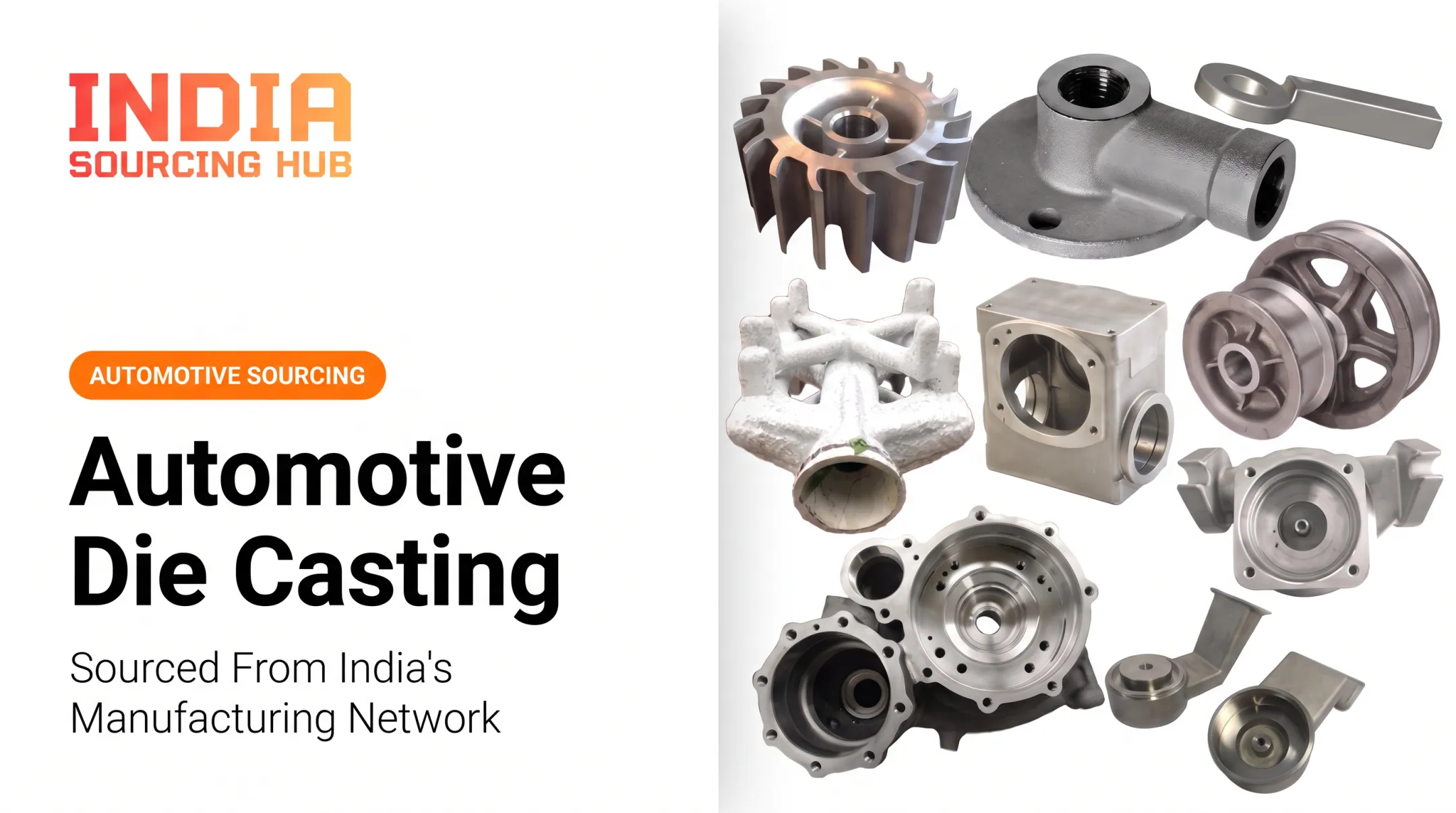
| Investment/sand/die casting | Housings, covers, valve bodies, pump housings, impellers, flanges | Pump and valve OEMs, industrial manufacturers |
| Forging | Transmission parts, drivetrain and differential gear parts, shafts, connecting rods | Driveline and powertrain suppliers |
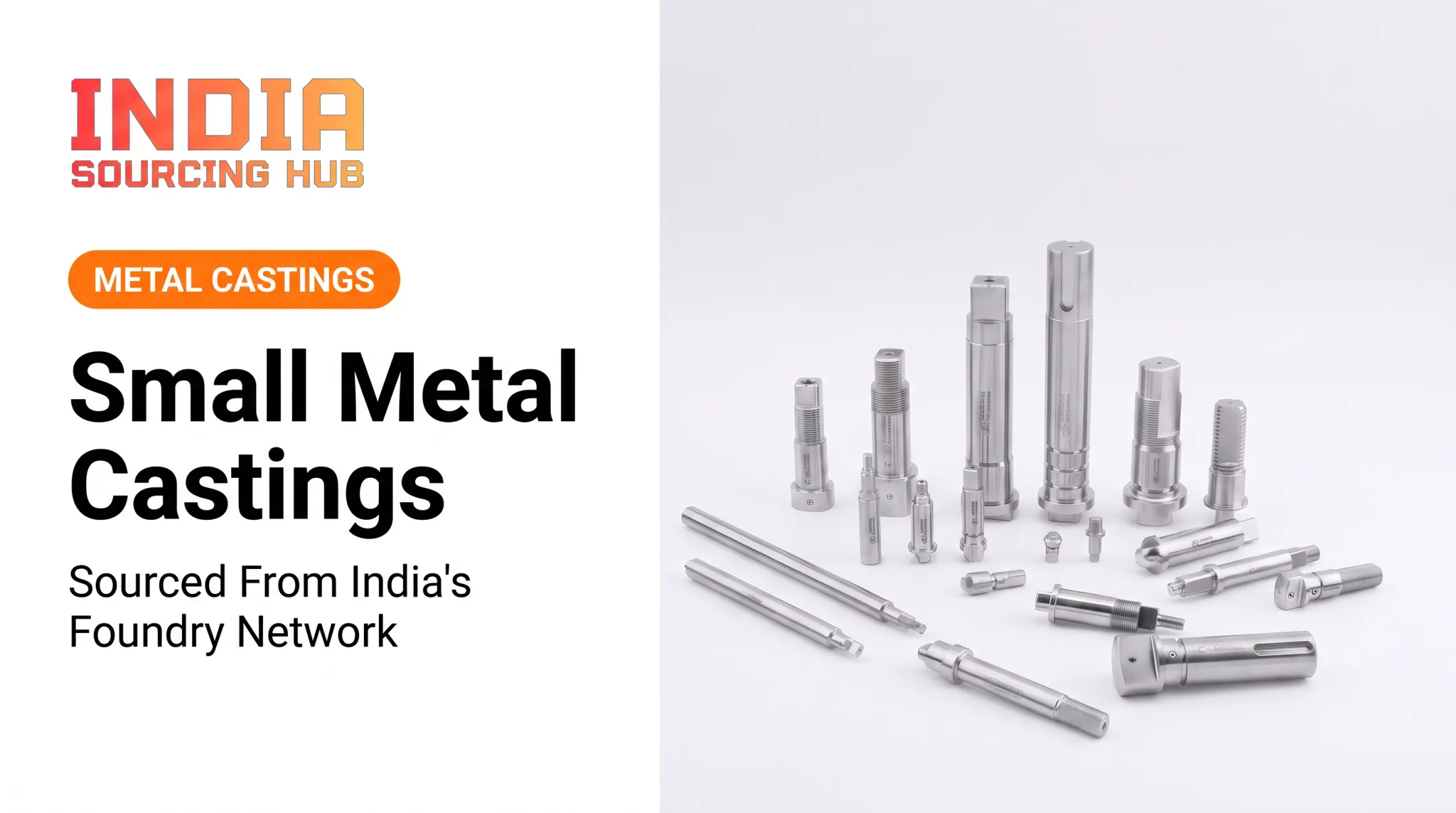
| CNC machining | High-tolerance brackets, shafts, flanges made to drawing | Tier 1/2 suppliers needing tight tolerances |
| Gear production | Gear components for power transmission | Automotive, truck, and industrial machinery builders |
Materials vary by category too. Cast components commonly use stainless steel, aluminum, brass, special alloys, and iron. Sourcing also hinges on material grade, heat treatment, and surface finish.
Where the Demand Signals Actually Point
Two demand pictures often get mixed together:
- OEM production demand is soft right now. MEMA's barometer shows commercial-vehicle suppliers more pessimistic than light-vehicle suppliers, with new orders down month-over-month and year-over-year.
- India-origin export supply is growing. ACMA reported $22.9 billion in FY2024-25 exports, up 8%, with North America at 32%. Top categories: drive transmission and steering, engine, suspension, braking, and body/chassis.
- Aftermarket replacement demand is tracked separately. MEMA's 2026 Replacement Rates Report covers 181 parts across 13 categories, including select ADAS and EV-related components.
Don't assume a part is a good overseas sourcing candidate just because it looks simple. A bracket with no complex geometry can still carry tight validation requirements, custom packaging needs, or intellectual property concerns that make the "simple" part harder to source than a complex one.
How the Automotive Parts Sourcing Process Works
A sourcing program that starts with a vague email and ends with a surprise invoice is a program waiting to fail. Here's the sequence that actually works.
Build a Complete Sourcing Brief First
Before contacting a single supplier, assemble:
- Engineering drawings and 3D files where applicable
- Bill of materials and material grade
- Tolerances, finish, and testing requirements
- Packaging standards and forecasted annual volume
- Target launch date and delivery location
AIAG's sub-tier supplier guidance calls for defining part and program requirements before supplier selection, not after quotes start arriving. Skipping this step means you'll be comparing apples to oranges when quotes come back.
Screen, Quote, and Sample in That Order
- Screen suppliers on manufacturing process, equipment, comparable part experience, and export experience
- Issue a consistent RFQ so every supplier quotes the same revision, quantity, Incoterms, and quality documentation
- Compare on total landed cost, not unit price—and require a named Incoterm plus delivery point on every quote
- Run first-article samples and validate dimensions and material properties before production release
- Document approval and lock in revision control before the first production order ships

The ICC's Incoterms 2020 rules allocate costs and risks differently by term, so quotes without a named Incoterm and delivery point aren't comparable.
Ask These Questions Before You Award Business
A short checklist saves a lot of pain later:
- Who owns the tooling if the relationship ends?
- How are drawing changes controlled and communicated?
- What happens if forecasted demand changes mid-program?
- How is a late or nonconforming shipment handled, and who pays for it?
Get clear answers in writing before you award—most programs that unravel six months in failed to lock these terms up front.
How to Evaluate Automotive Suppliers
Picking a supplier on price alone is how buyers end up with a cheap part that costs twice as much in rework. Evaluation needs to go deeper.
Technical and Quality Checks
Start with the fundamentals: relevant machinery, process controls, metrology equipment, and tooling capability. Then verify they've actually made something comparable before, not just something in the same industry.
On the quality side, look for:
- Documented inspection procedures and lot traceability
- Calibration records for measurement equipment
- Sample approval history and nonconformance records
- Corrective action processes that actually closed out, not just opened
ISO 9001 certification confirms a management system, not that a specific part passed your approval process. Don't conflate the two. A supplier can hold a general quality certificate and still fail a part-specific validation.
If you're supplying into a program with customer-specific requirements, like Ford's IATF 16949 registration expectations, check whether the certification scope actually covers those requirements rather than assuming it does.
Capacity, Communication, and Due Diligence
Capacity questions matter more than they get credit for:
- What's their current production volume versus your forecasted demand?
- Do they depend on subcontractors for critical operations like heat treatment?
- What's their backup plan if primary equipment goes down?
Communication is where a lot of overseas sourcing relationships quietly fail. Over a two-year program, these checks matter more than they do in week one:
- Response speed
- Clear drawing interpretation
- Willingness to flag problems early rather than hide them
Finally, cover the commercial basics:
- Payment terms
- Tooling and design IP ownership
- Confidentiality terms
- Export documentation requirements
A staged qualification approach beats a single low quote every time: document review, technical discussion, a sample order, then monitored production.
Managing Cost, Logistics, and Supply Risk
Landed cost is the real number that matters: supplier price plus freight, duties, brokerage, packaging, inspection, inventory carrying cost, and the cost of any defects or delays along the way.
Tariffs Are Changing the Math
Duty exposure now varies significantly by part category and country of origin. CBP guidance confirms an additional 25% duty on covered medium- and heavy-duty truck parts under HTSUS 9903.74.08, effective November 1, 2025, with a separate 0% provision for qualifying USMCA-origin parts. Passenger-vehicle and light-truck parts carry their own additional 25% duty from covered countries, effective since May 2025.

These rates don't apply uniformly. The specific HTS classification determines what you actually owe, and that's why a quoted piece price without duty exposure identified isn't a usable comparison.
Buffer Inventory vs. Just-in-Time
For long-lead, single-source, or safety-critical parts, pure just-in-time replenishment is a gamble. A second qualified source, regional inventory, or a flexible delivery schedule all reduce exposure to port congestion or an unexpected supplier interruption.
This is where minimum order quantities often trip up small and mid-sized buyers. Consolidated orders, scheduled releases, or North American warehousing can make overseas sourcing practical even when your volumes don't hit a factory's standard MOQ.
India Sourcing Hub operates on this model directly. The company's warehouses in Chicago, Toronto, and Rajkot hold inventory and deliver on demand, which takes MOQ pressure off buyers who can't commit to a full container load.
Its all-in pricing structure, covering samples through production, is built so buyers aren't comparing a quote that looks low on paper against one that already includes freight and inspection.
Landed cost and buffer stock only hold if supplier performance stays visible. Track these indicators on an ongoing basis to catch problems before they become disruptions:
- On-time delivery rate
- Defect rate (PPM)
- Supplier response time to issues
- Lead-time variance versus quoted schedule
- Corrective action closure time
Direct Sourcing vs. a Sourcing Partner
Some buyers are built to source directly. Others get better results with a sourcing partner.
When Direct Sourcing Makes Sense
Direct factory sourcing works well when you have an established procurement team, high recurring volumes that justify the overhead, and staff who can travel to audit suppliers in person.
McKinsey's analysis of overseas sourcing found that even large manufacturers underestimated the work in supplier evaluation and relationship management. Direct is not automatically cheaper.
When a Sourcing Partner Makes More Sense
A sourcing partner tends to fit better for:
- Lower-volume programs that can't justify a full-time overseas buying team
- New-product sourcing where you need a trusted prototype-to-production partner
- China-diversification initiatives where speed matters and in-country experience doesn't exist yet
- Teams without the bandwidth to manage MOQs, customs paperwork, and quality follow-up simultaneously
If you're evaluating a partner, look for relevant product experience, clear division of responsibility, documented quality controls, and transparency around logistics and warehousing options. Vague answers to "who's responsible if a shipment is late" are a red flag.

India Sourcing Hub has sourced metal products for North American manufacturers since 1995. Its Indian supplier network has met the company's quality requirements since 2013.
Chicago and Toronto teams manage logistics and import details in North America, while engineers in Rajkot handle quality inspection before anything ships. For buyers weighing India as an alternative to China-origin sourcing, that mix of North American accountability and in-country oversight is often the deciding factor—apart from any specific tariff savings claim.
Frequently Asked Questions
What is parts sourcing?
Parts sourcing is the process of finding, qualifying, purchasing, and managing suppliers who can produce components to your technical specifications, quality standards, and delivery schedule. It covers everything from the first RFQ to ongoing production management.
What is a sourcing company?
A sourcing company helps buyers identify and manage qualified manufacturers, negotiate terms, and coordinate orders. It typically oversees quality inspection and logistics too, reducing the workload that comes with managing overseas procurement directly.
Which car parts are in high demand?
Demand varies by category. MEMA supplier sentiment data shows softer OEM production demand recently, while aftermarket needs track vehicle age and repair cycles. Drive transmission, steering, engine, and braking components remain high-volume categories.