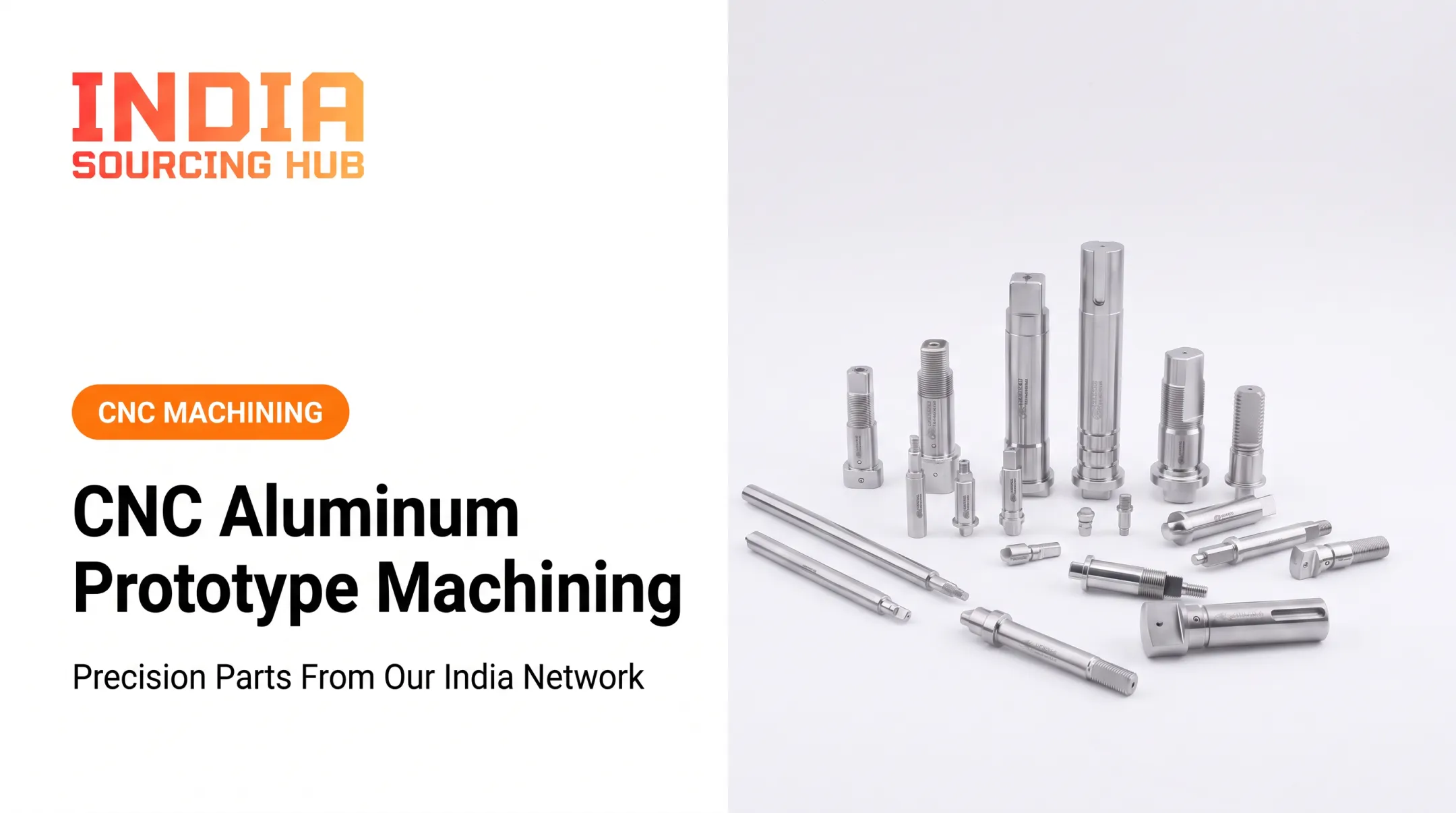
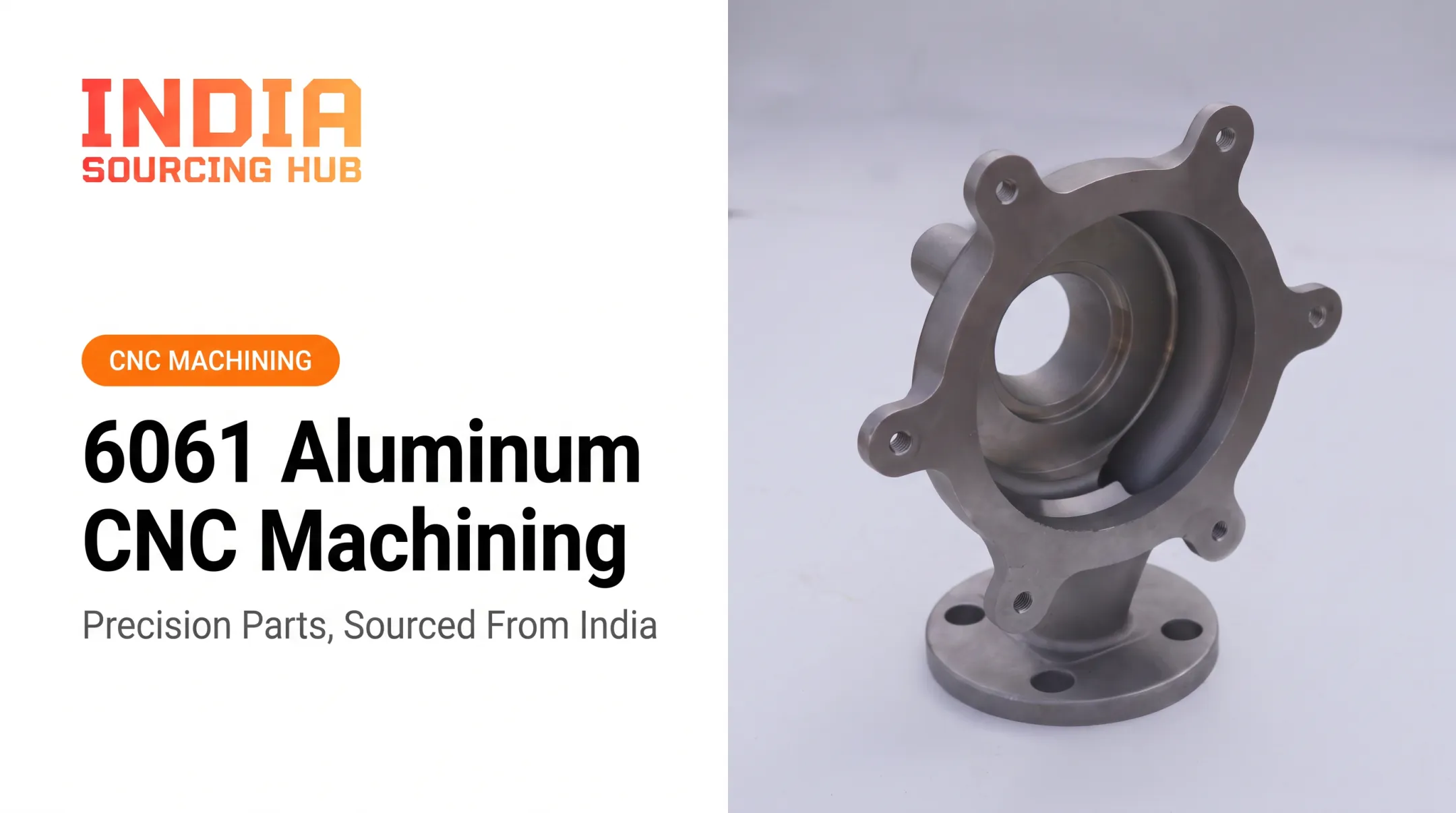
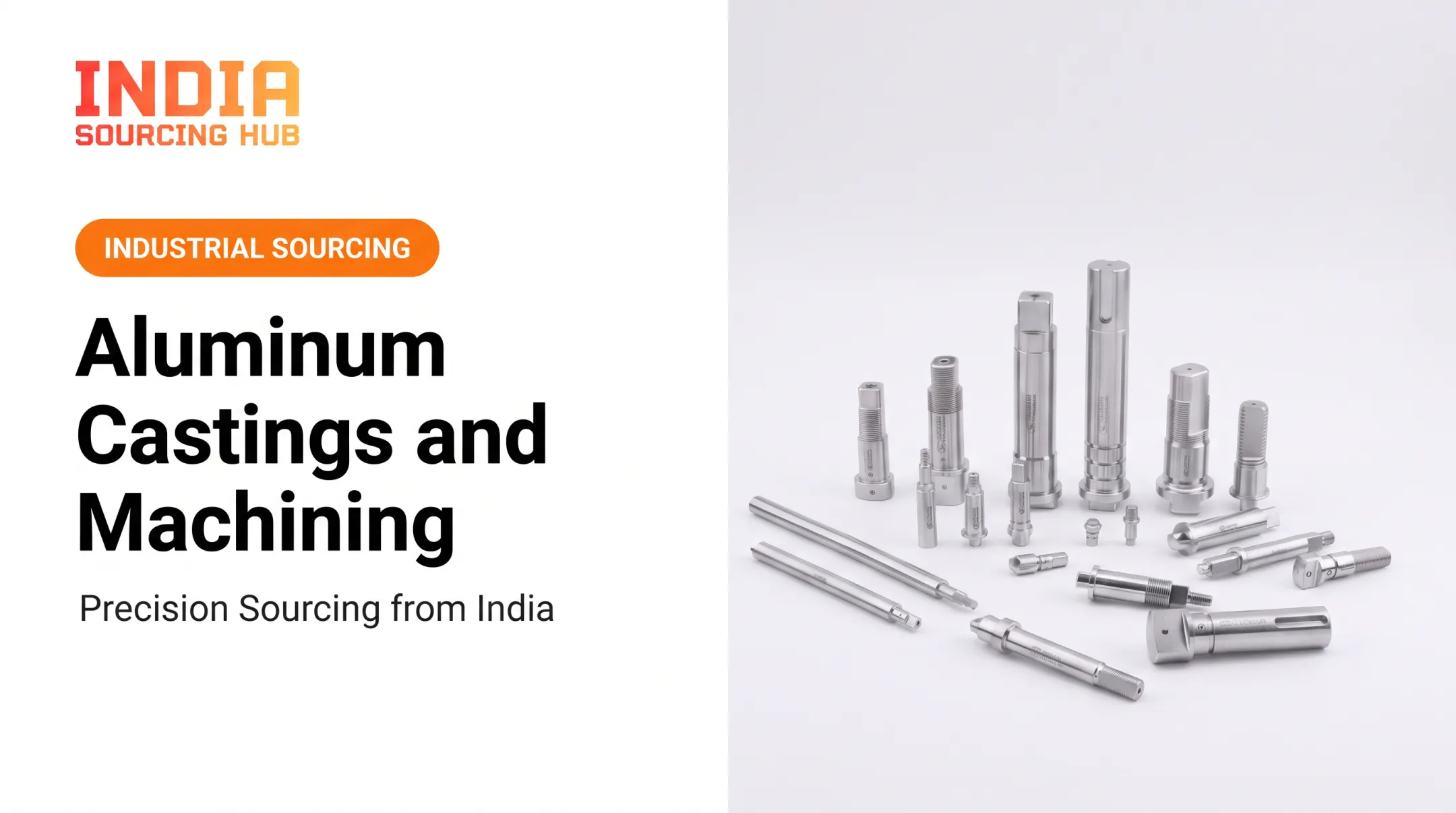
Results depend on which alloy you pick, how the part is held in the machine, what tooling is used, and whether the process is controlled with any discipline. A bracket cut from the wrong temper, or clamped without enough support, can fail inspection even though the material itself was never the problem.
This guide covers what aluminum CNC machining actually involves, how to choose between common alloys like 6061, 7075, 2024, and 5052, the difference between milling and turning, what drives cost and quality, and how to put together a sourcing request that gets you a real quote instead of a guess.
Key Takeaways
- No single aluminum grade or machine setup works for every part. Selection depends on load, environment, and geometry.
- 6061-T6 is a reasonable default for brackets and housings, but 7075, 2024, and 5052 each solve different problems.
- Sharp tooling, rigid fixturing, and realistic tolerances matter more than chasing a faster spindle.
- Final part pricing reflects geometry, quantity, finishing, inspection, and logistics, not material cost alone.
What Is Aluminum CNC Machining and Why Is It Used?
Aluminum CNC machining is a subtractive process. Computer-controlled cutting tools remove material from aluminum bar, plate, or billet stock to produce pockets, holes, threads, profiles, and finished surfaces according to a drawing. The part starts as a solid block or extrusion and gets cut down to final shape.
Milling vs. Turning
The two core machine types handle different geometries:
- CNC milling uses a rotating cutter against a stationary (or indexed) workpiece. It's the go-to choice for prismatic parts with multiple faces: housings, brackets, plates, and anything with pockets or angled features.
- CNC turning rotates the workpiece against a stationary cutting tool. It's suited to round components: shafts, bushings, spacers, and threaded cylindrical parts.
Many parts need both. A turned shaft might get a cross-drilled hole or a milled flat. Shops often combine lathe and mill operations in one job traveler rather than treating them as separate processes.
Advantages and Trade-Offs
Aluminum alloys are lightweight, corrosion-resistant in most tempers, and good conductors of heat and electricity, which makes them useful well beyond structural parts. According to The Aluminum Association, aluminum is 100% recyclable without any loss of its inherent properties, and nearly 75% of all aluminum ever produced is still in use today.
That said, aluminum isn't without weaknesses:
- Softer alloys scratch and dent more easily than steel.
- Thin-walled aluminum parts can distort during machining or heat treatment if fixturing is poor.
- Wrought aluminum (bar, plate, extrusion) and cast aluminum behave differently under the cutter. Cast material often has more porosity and inconsistent hardness.
Aluminum is frequently more economical to machine than harder metals, largely because it generates less tool wear and allows higher material removal rates. The exact cycle-time or cost difference varies by alloy, geometry, and machine setup, so treat any blanket percentage claim with skepticism until it's tested on your actual part.
Which Aluminum Alloy Is Best for CNC Machining?
Alloy selection is a trade-off between strength, machinability, corrosion resistance, weldability, and cost. Match those factors to what the part actually needs to do.
6061: The Practical Default
6061-T6 or T651 is a sensible starting point for brackets, housings, fixtures, prototypes, and general machine components. The "T6" temper designation means the alloy has been solution heat-treated and artificially aged, which boosts strength and relieves internal stress compared to softer tempers.
Kaiser Aluminum's technical data lists 6061-T6/T651 sheet at a typical ultimate tensile strength around 45 ksi, though actual values vary by product form and thickness.
7075: When You Need More Strength
7075 outperforms 6061 on strength, which matters for high-load or weight-sensitive parts like aerospace fittings or performance brackets. The trade-offs:
- Higher material cost than 6061
- Generally poor suitability for conventional fusion welding
- Corrosion resistance that depends heavily on temper and finish
A side-by-side comparison from Ryerson lays out these differences in more detail if you're weighing the two directly.
2024: Fatigue and Structural Performance
2024, typically in T4 or T351 temper, machines well and offers strong fatigue performance. It is a common choice in aerospace and precision fittings. Corrosion resistance is only fair, though, so confirm anodizing or other protective finishing before specifying it for exposed applications.
5052: Better Suited to Sheet Work
5052 is machinable. Its real strengths are formability and corrosion resistance in sheet and tube form: panels, covers, and bent or formed components rather than complex billet-machined parts.
Vendor machining ratings for 5052-H32 sheet typically land at "fair," which is workable but not the first choice when a part is dominated by pockets, bores, or tight features.
Alloy Selection Checklist
Before finalizing a grade, confirm:
| Factor | Question to answer |
|---|---|
| Load | Static, dynamic, or fatigue-critical? |
| Environment | Indoor, outdoor, chemical exposure? |
| Geometry | Billet-machined or sheet-formed? |
| Finish | Anodized, painted, or bare? |
| Quantity | Prototype or production run? |
| Stock form | Bar, plate, sheet, or extrusion available? |
Always specify the material standard and temper on the drawing or purchase order. "Aluminum" alone isn't a specification.
How Is Aluminum CNC Machined? Processes, Tools, and Cutting Strategy
A typical production sequence runs:
- Drawing and CAD/CAM review
- Material verification
- Workholding setup
- Roughing
- Semi-finishing
- Finishing
- Deburring
- Surface treatment
- Inspection
- Packing

Skipping steps—especially material verification—is where avoidable problems start.
Common Operations
Milling covers facing, pocketing, profiling, slotting, contouring, drilling, boring, tapping, and thread milling. Typical feature work includes:
- Facing — establishes a flat reference surface
- Pocketing — removes internal material
- Thread milling — cuts threads without a tap when thread quality or hole size demands it
Turning handles round parts and often combines drilling, grooving, threading, boring, and parting in a single setup. Fewer re-fixturing steps mean better repeatability and less chance of introducing runout between operations.
Tooling Choices
Sharp, polished carbide tooling is a solid starting point for most aluminum jobs. According to Harvey Performance Company's aluminum machining guide, 2- and 3-flute end mills are preferred over higher flute counts, since more flutes restrict chip clearance in a material that produces long, stringy chips.
Key variables to balance:
- Flute count — fewer flutes, more chip room
- Helix angle — higher helix angles help aluminum's soft, gummy chips evacuate cleanly
- Coatings — uncoated, ZrN, or TiB2 depending on the application
- Tool stick-out — shorter stick-out improves rigidity and reduces chatter
Speeds and feeds should come from the tool manufacturer's recommendations, then get adjusted for alloy, temper, cutter diameter, machine rigidity, and desired finish. There's no universal setting that works across machines and parts.
Chip Evacuation and Heat Control
Aluminum generates heat fast, and poor chip control causes most of the common defects in this material. Air blast, mist, or compatible coolant all help, depending on the operation.
Troubleshooting mini-guide:
| Symptom | Likely cause | What to check |
|---|---|---|
| Material welding to tool edge | Built-up edge from heat/friction | Tool sharpness, coating, coolant delivery |
| Burrs on edges | Dull tool or wrong exit strategy | Tool wear, feed direction, deburring step |
| Chatter marks | Insufficient rigidity | Tool stick-out, workholding, spindle speed |
| Broken tools | Excessive engagement or recut chips | Chip evacuation, radial/axial depth of cut |
| Dimensional drift | Heat buildup or fixture movement | Coolant strategy, clamping force, tool wear |
Design, Quality, and Cost Planning for Aluminum CNC Parts
Good design-for-machining decisions prevent most quality problems before the part ever hits the machine.
Designing for the Cutter
- Keep features reachable without extreme tool stick-out
- Avoid unnecessarily deep, narrow pockets
- Add internal radii sized to match standard cutter diameters, not arbitrary values
- Provide a stable, flat surface for fixturing
- Skip thin unsupported walls that vibrate or distort during cutting
Tolerances by Function, Not Uniformly
Not every dimension needs the same tolerance. Apply tight tolerances only where function demands it:
- Critical fits: bearing bores, shaft diameters
- Sealing surfaces: flatness and finish matter more than overall dimension
- Threads: class of fit should match the mating hardware
- Cosmetic surfaces: often need looser dimensional control but tighter finish requirements
General tolerances for unspecified dimensions commonly reference standards like ISO 2768-1, while GD&T symbols follow ASME Y14.5. Neither standard guarantees any given supplier can hold a specific tolerance on your part. Confirm capability directly.
Finishing Considerations
Deburring, bead blasting, anodizing, powder coating, and heat treatment all affect dimensions or appearance to some degree. Anodizing, for instance, adds a thin oxide layer that can affect tight-tolerance features if not accounted for in the drawing.

What Drives Cost
- Raw material and stock size, including waste
- Programming and setup time
- Number of operations and total machining time
- Tooling and fixtures
- Finishing and inspection requirements
- Packaging, freight, and quantity
To reduce cost without hurting function:
- Simplify geometry where possible
- Consolidate features that can share a setup
- Relax tolerances where they don't matter
- Pick a readily available alloy
- Specify only the finishes you actually need
Buyer Preparation Checklist
- 3D CAD file and 2D drawing
- Alloy and temper specified
- Order quantity and projected annual demand
- Critical tolerances called out separately
- Surface finish requirements
- Inspection expectations (first-article, in-process, final)
- Packaging and delivery date
- Any required material certifications
Where Aluminum CNC Parts Are Used and How to Source Them
Aluminum CNC parts show up across a wide range of industrial applications:
- Pump and valve components, including bodies and stems
- Automotive and truck components
- Robotics and automation hardware
- Electronics housings
- Industrial equipment, fixtures, and prototypes
- Lightweight structural assemblies
General industrial applications differ from safety-critical uses. A valve housing or structural bracket in a regulated system typically needs formal engineering validation and testing. Machinability alone doesn't establish approval for pressure-retaining or load-bearing applications.
Prototype vs. Production Sourcing
Sourcing needs shift as volume grows:
- Prototype runs focus on getting the design right quickly
- Low-volume production introduces approved samples and basic inspection plans
- Repeat production demands process consistency, reorder documentation, and inventory planning so parts are ready when needed
Supplier Evaluation Checklist
Before committing to a supplier, confirm:
- Relevant alloy and application experience
- Ability to interpret complex drawings and GD&T
- Equipment and process capability matching your part
- Documented quality-control procedures and traceability
- Responsive, clear communication
- Access to finishing partners (anodizing, coating)
- Reliable lead times and import documentation
This is where a lot of buyers run into friction. Indian and overseas suppliers can produce good aluminum parts; the hard part is managing the relationship, technical requirements, and logistics with staff time most companies don't have to spare.
India Sourcing Hub works in this gap. It connects North American manufacturers with vetted Indian metal-product suppliers and handles the pieces that usually cause headaches:
- Technical requirements and supplier communication
- Quality expectations and import logistics
- Warehousing in Chicago and Toronto
For manufacturers diversifying away from a single country, easing MOQ pressure, or lacking staff to coordinate overseas vendors, that support can mean the difference between a smooth reorder and a stalled line.

Conclusion
Reliable aluminum CNC machining comes down to a handful of decisions made early:
- Match alloy and temper to the actual application
- Design parts for tool access and stable fixturing
- Choose tooling and cutting parameters that fit the job
- Document inspection and finishing requirements instead of assuming they're understood
If you're preparing to source aluminum parts, start with your CAD package and drawing, nail down functional requirements and expected volume, then request a technically detailed quote. Compare total delivered cost and supply reliability — not just the unit price on the first quote that lands in your inbox.
Frequently Asked Questions
How much does it cost to CNC machine aluminum?
Cost depends on alloy, stock size, part geometry, tolerances, setup time, quantity, finishing, inspection, and freight. Request a quote using complete CAD and drawing information rather than relying on a generic per-part estimate.
What is the best way to CNC aluminum?
Start with the correct alloy, sharp carbide tooling, feeds and speeds suited to that tool and material, rigid workholding, short tool stick-out, and reliable chip evacuation. The ideal setup still depends on the specific part and machine.
Can aluminum be CNC machined?
Yes. Aluminum is commonly CNC machined through milling, turning, drilling, boring, tapping, and related operations. Alloy, geometry, machine rigidity, and tooling all affect the final result.
What does CNC machined aluminum mean?
It refers to aluminum stock shaped by computer-controlled cutting tools, with material removed to create specified dimensions, holes, pockets, threads, profiles, and surface features according to a drawing.
What type of aluminum is best for machining?
6061 is often a practical general-purpose choice. 7075, 2024, or 5052 may fit better depending on strength, corrosion resistance, or formability needs. Always specify temper and material certification alongside the alloy.
Is 5052 aluminum machinable?
Yes, 5052 can be machined. It's more commonly selected for corrosion-resistant, formed, or sheet-metal components, so it may not be the first choice for complex billet-machining jobs.