Introduction
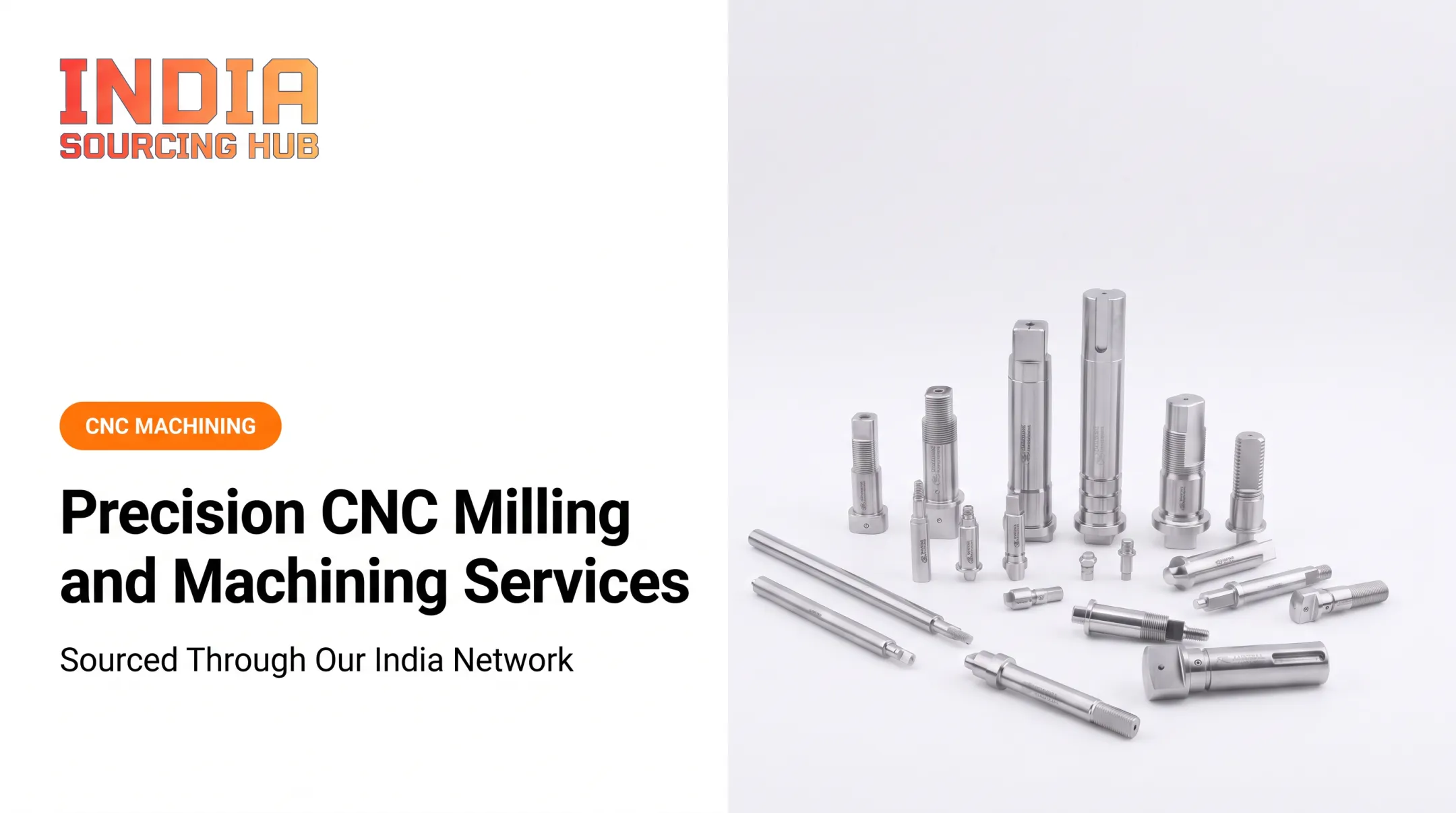
CNC production machining turns a digital part design into a repeatable, production-ready component. A computer-controlled machine tool removes material from metal or plastic stock, a casting, or a forging until the part matches the drawing.
For US manufacturers sourcing production parts, the struggle is consistency across every batch: dependable quality from the first article to the ten-thousandth, volumes that scale without surprises, and delivery dates that hold up.
Add in total landed cost, not just piece price, and the sourcing decision gets complicated fast.
This article breaks down how the process works, what machines and materials to consider, what drives precision, where CNC machining fits best, and how to evaluate a production partner before you commit.
Key Takeaways
- Use CNC production machining for repeatable end-use parts when dimensional consistency is non-negotiable
- Match machine and process to part geometry, material, tolerances, volume, and inspection needs
- Treat drawings, CAM programming, fixturing, and inspection as equal drivers of quality, not just the machine
- Evaluate suppliers on process capability, quality systems, logistics, and total landed cost, not piece price alone
What Is CNC Production Machining?
CNC production machining uses computer-controlled machine tools to manufacture repeated quantities of finished or near-finished parts from a digital design. A machinist loads a program, secures the workpiece, and the machine executes the same toolpaths batch after batch.
Production Work vs. One-Off Machining
Production machining isn't defined by a specific order quantity. A supplier might run 50 parts or 50,000. What separates it from prototype or one-off work is a controlled, repeatable process:
- Production tooling and dedicated fixtures
- Standardized setups documented for every operation
- Repeatable workholding that locates the part the same way each time
- Process monitoring and recorded inspection results
As Modern Machine Shop's coverage of Budde Precision Machining illustrates, moving from tooling trials to actual production work requires a more disciplined, documented approach than one-off sample runs. Low-volume and prototype work doesn't carry the same process rigor.
The Basic Subtractive Process
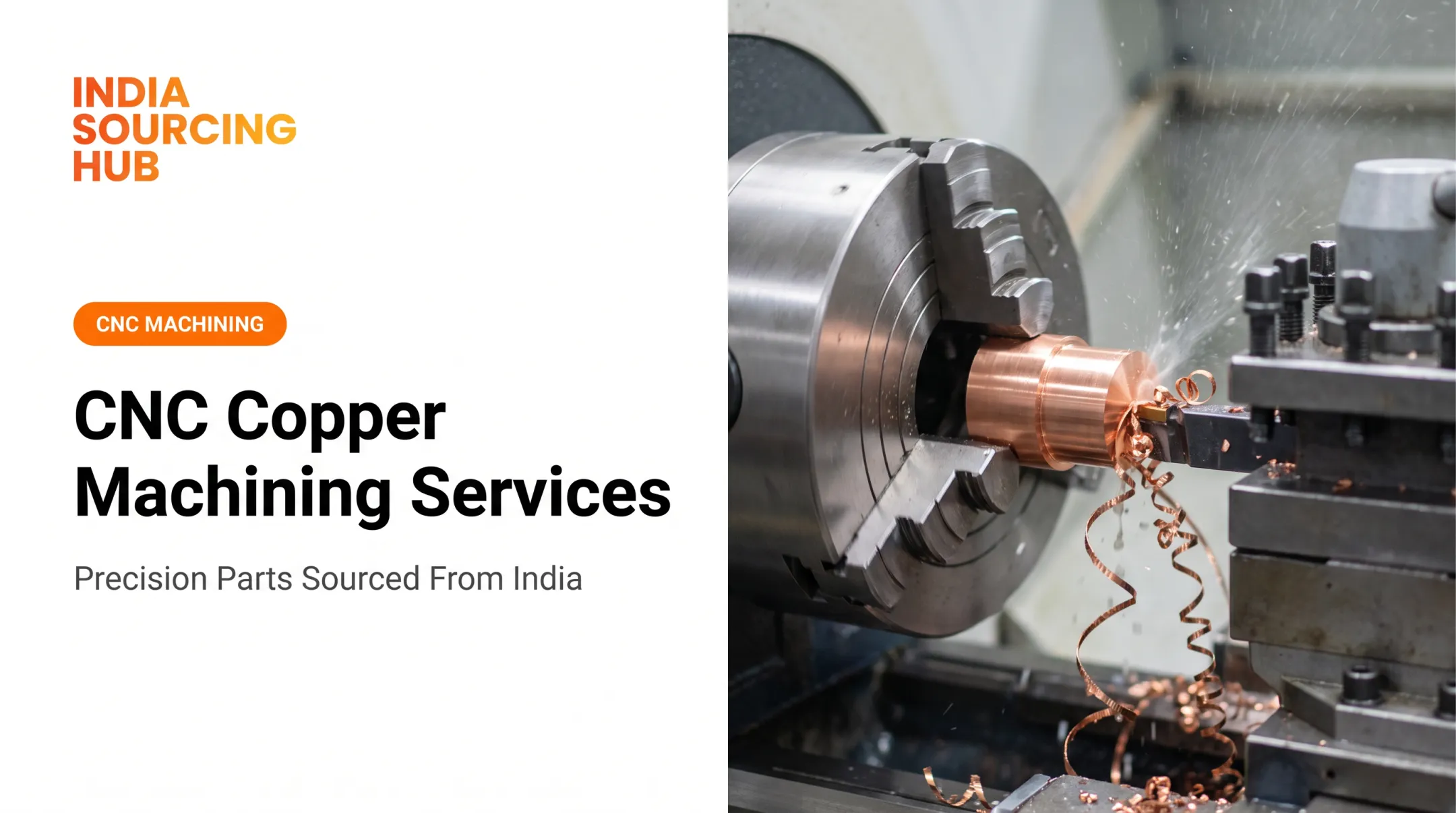
Operators secure the workpiece in a fixture, and cutting tools follow programmed toolpaths. Material is removed through milling, turning, drilling, boring, threading, and deburring until the part matches spec.
Behind that sequence sit three pieces of software and code:
- CAD — the model and technical drawing that communicate geometry and requirements
- CAM — software that converts the design into machine-readable toolpaths
- G-code — the machine instructions controlling movement, speeds, feeds, and tool changes
Review every production file for manufacturability before a single chip gets cut. Catching a problem on screen costs nothing. Catching it on the shop floor costs tooling, scrap, and schedule.
Where CNC Production Machining Shows Up
Walk through almost any industrial supply chain and you'll find machined parts: pump and valve bodies, automotive and truck components, housings, shafts, brackets, impellers, and valve balls.
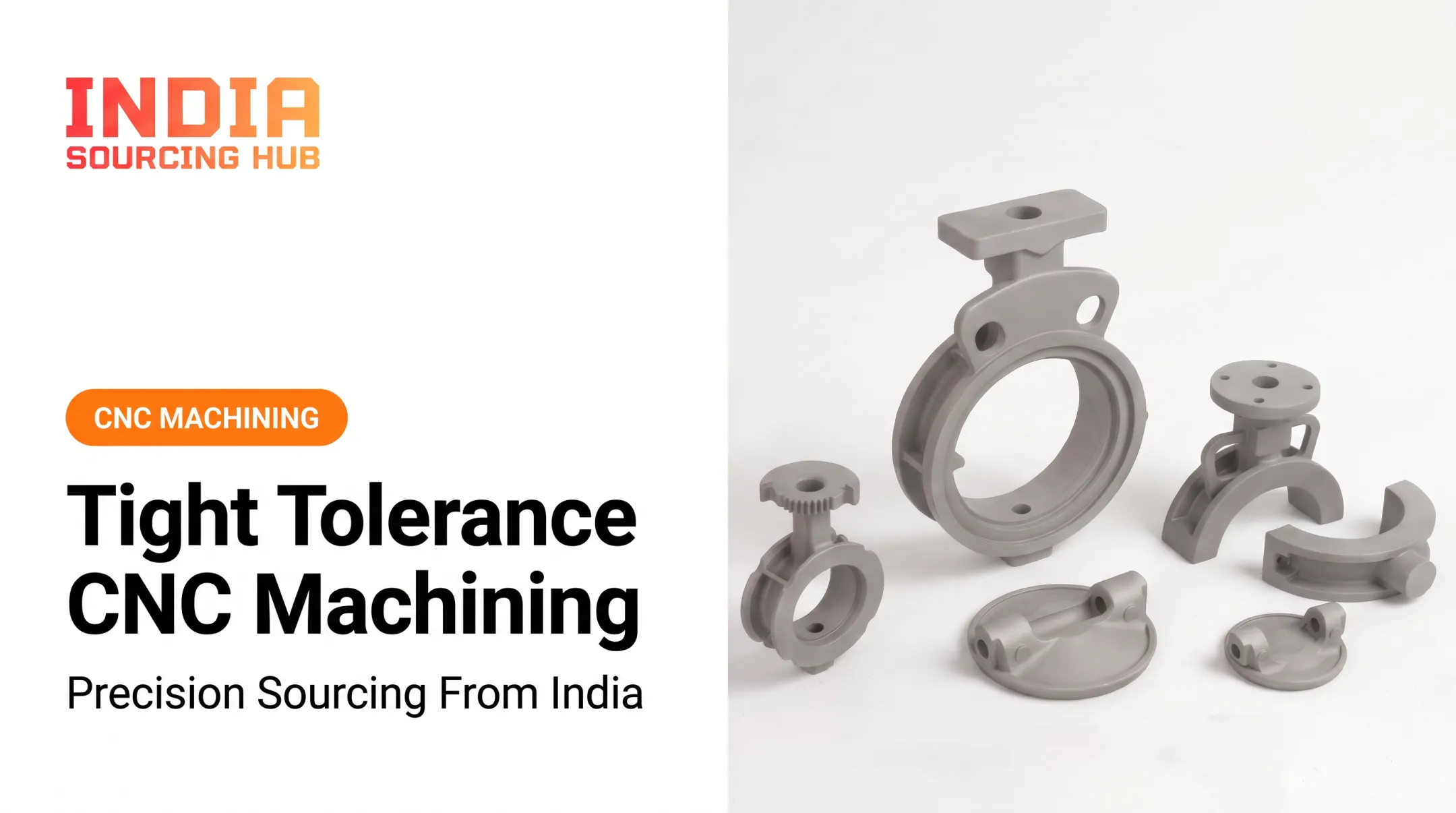
Some start from solid bar or billet. Others begin as a casting or forging, with CNC finishing the critical surfaces, holes, threads, and tolerances a rough casting can't hold on its own.
How the CNC Production Machining Process Works
A production part travels through several checkpoints before it ships, each one designed to catch problems before they compound.
From Drawing Review to Shipment
The typical workflow includes:
- Engineering review: drawing and 3D-model review, material confirmation, manufacturability analysis
- Quotation and process planning: tooling, fixturing, and setup strategy based on part geometry
- First-piece production: a single part produced and inspected before the full batch starts
- Production release: the approved process runs at volume
- Final inspection and packing: dimensional checks, cleaning, and packaging for shipment
Design Decisions That Affect Cost and Schedule
Not every tolerance needs to be tight. Tolerances should match the function of the feature, not get applied uniformly across the whole part. Features that drive up cost without adding value include:
- Unnecessarily tight tolerances on non-critical dimensions
- Deep, narrow pockets requiring long, flexible tooling
- Thin walls prone to distortion under cutting forces
- Sharp internal corners that force slower feed rates
- Deep holes and features that are hard for tools to access
A drawing with realistic tolerances on only the features that matter gets quoted faster and machined more reliably.
Workholding and Fixturing
Repeatability depends heavily on how the part gets held. Good fixturing establishes consistent locating datums, keeps the part stable under cutting forces, gives tools clear access, and prevents distortion. Every re-fixturing step, moving the part to a new setup, adds handling time and introduces a chance for alignment to drift. Fewer setups generally means tighter consistency between parts.
Core Machining Operations
| Operation | Production Purpose |
|---|---|
| Milling | Flats, pockets, slots, contours, complex surfaces |
| Turning | Cylindrical bodies, shafts, bores, grooves, OD features |
| Drilling/boring/reaming | Accurate holes to size |
| Tapping/thread milling | Threaded features |
| Deburring, washing, finishing | Secondary operations before shipment |
Quality Controls That Hold the Line
Production quality relies on first-article or first-piece inspection, in-process checks, final inspection, and recorded dimensional data. As Modern Machine Shop notes on perfecting a machining process, periodic machine checks combined with finished-part validation build trust in a process over time, since a first article alone doesn't guarantee every part after it matches.
At India Sourcing Hub, India-based engineers inspect every production run before it ships, and third-party factory inspection is built into the standard process rather than offered as an add-on.
Feedback loops matter just as much as the inspection itself. Tool-life monitoring, fixture adjustments, scrap review, and preventive maintenance all feed back into the process. Clear communication between buyer, engineer, machinist, and quality team is usually what prevents the same defect from showing up twice.

CNC Machines, Materials, and Precision
Picking the right machine starts with the part, not the other way around.
Matching Machine to Part Geometry
- CNC mills handle prismatic, multi-sided components
- CNC lathes handle round parts and turning operations
- Mill-turn machines combine turning and milling in fewer setups, useful for complex shaft-style parts
- 3-axis, 3+2-axis, and 5-axis machines offer increasing access to complex features, reducing how often a part needs re-fixturing
Haas Automation's documentation on 3+2 positioning machines shows how indexing a part for multi-sided access cuts down on setup count, a direct lever for both cost and consistency.
How Material Drives the Process
Common production materials include aluminum, carbon and alloy steels, stainless steel, brass, bronze, and engineering plastics. Each behaves differently under a cutting tool:
- Hardness and alloy content affect cutting speeds and tool wear in steels
- Work hardening and heat generation complicate stainless steel machining
- Thermal conductivity and moisture absorption can shift dimensions in engineering plastics
Castings and forgings bring an added wrinkle. They need machining allowances built into the design and inspection for defects before final machining begins. You can't fix a void or inclusion with a sharper tool.
What Actually Determines Precision
"Precision" gets thrown around loosely. It actually breaks into distinct concepts:
- Accuracy: how close a part is to the target dimension
- Repeatability: how consistently the machine hits the same result run after run
- Tolerance: the allowable deviation specified on the drawing
- Surface finish: the texture and smoothness of machined surfaces
- Measurement resolution: how finely the inspection equipment can detect deviation
There's no single tolerance that applies universally. Protolabs' guidance on CNC machining tolerances cites a standard tolerance around ±0.005 in. for typical production work, with tighter results possible depending on geometry and material. Treat figures like that as a starting benchmark, not a guarantee for every supplier or every feature.
Achievable results depend on:
- Machine condition and tooling
- Fixturing and part geometry
- Material behavior under cutting forces
- Thermal stability on the shop floor
- Inspection equipment used to verify the part
The "Most Precise Machine" Myth
A 5-axis machine isn't automatically the right answer. A well-controlled 3-axis process, properly fixtured and inspected, can outperform a poorly planned 5-axis job on a simple part.
Machine capability only matters relative to geometry, setup count, tolerance, volume, and cost. Match the tool to the job, not the other way around.
Benefits and Applications of CNC Production Machining
CNC production machining earns its place in industrial supply chains for a few concrete reasons:
- Repeatable dimensions across batches once the process is validated
- Efficient reproduction of complex geometries that would be slow or inconsistent by manual methods
- Reduced manual intervention after programming and setup are locked in
- Flexibility across materials and part designs without retooling an entire line
- A direct path from approved prototype or casting to recurring production volume
Where It Shows Up Across Industry
Common production uses include:
- Pump and valve work: bodies, stems, balls, impellers, and other cast-then-machined components
- Automotive and heavy-truck parts: shafts, housings, brackets, and drivetrain components
- Broader industrial hardware: fluid-handling equipment and construction machinery components
A Real-World Efficiency Gain
Modern Machine Shop's coverage of McKenzie CNC documents a radio-antenna part that previously took eight minutes per part on vertical mills. After switching to palletized four-axis horizontal machining, a batch of 12 parts was machined in 18 minutes, more than doubling throughput on that repeat-work job.

The gain came from fewer setups and better fixture planning, not just the extra axis alone.
When CNC Machining Isn't the Right Call
CNC machining doesn't win every comparison:
- Casting suits high volumes once tooling investment pays off, typically in the thousands-of-units range
- Forging offers grain structure and material efficiency advantages for load-bearing parts
- Sheet-metal fabrication handles flat, formed geometries more economically
- Injection molding makes sense for high-volume plastic parts once mold costs amortize
- Additive manufacturing opens up geometries machining can't reach, though it carries its own dimensional and porosity risks
Often, the smartest approach combines processes: casting or forging a near-net blank, then using CNC machining to bring critical features to final spec. That's exactly how India Sourcing Hub's investment-cast valve bodies and other cast components typically move through the supply chain: rough form from casting, precision from machining.
How to Choose a CNC Production Machining Partner
The right supplier evaluation starts before you ever request a quote.
Nail Down Requirements First
Prepare these before reaching out:
- 2D drawings and 3D CAD files with current revision levels
- Material specifications and surface-finish requirements
- Tolerances and applicable inspection standards
- Expected volumes, packaging needs, and delivery expectations
Clear requirements let every supplier quote against the same baseline, which makes comparisons meaningful instead of apples-to-oranges.
Evaluate Technical and Quality Capability
Ask direct questions:
- Does the supplier have experience with this material, this geometry, and this tolerance range?
- Can they provide sample inspection reports, material certificates, and calibration records?
- How do they handle engineering changes, nonconforming parts, and traceability?
Assess Commercial and Operational Reliability
Piece price is only one line item. Total landed cost includes tooling, setup, inspection, packaging, freight, duties, and inventory carrying costs.
The NIST reshoring guidance breaks total cost of ownership into acquisition, transport, storage, and financing. Compare suppliers on that full picture, not just the quoted unit price.
Also confirm realistic lead times, minimum order flexibility, backup capacity, and who's managing export documentation and import logistics into the US.

Where an Overseas Sourcing Partner Adds Value
A sourcing partner can help US manufacturers identify qualified suppliers, align drawings and quality expectations, coordinate inspections, and manage import logistics and warehousing. Most internal purchasing teams lack the bandwidth to do that work well on their own.
India Sourcing Hub has sourced metal products for North American manufacturers since 1995 and built an Indian manufacturing network meeting its quality standards since 2013. The company manages factory selection, quality assurance, packaging, shipping, and warehousing from sample through delivery.
Operations in Chicago and Toronto pair with on-the-ground engineers in Rajkot who inspect every production run before it ships. That setup matters for buyers evaluating a second country of supply, especially manufacturers factoring in Section 301 tariffs applied to Chinese-origin goods. CBP notes those tariffs apply based on country of origin rather than country of export.
Supplier-Screening Checklist
Before signing off, confirm:
- Can the supplier make this part repeatedly at the volume you need?
- Can they demonstrate control over material, dimensions, finishing, and inspection?
- Is communication clear and consistent throughout production?
- Does their logistics and inventory model fit your US delivery requirements?
- Does total landed cost stay competitive once quality and supply-chain risk are factored in?
Frequently Asked Questions
How precise can machining be?
Precision depends on the machine, material, tooling, fixturing, part geometry, thermal conditions, and inspection method used. Check the part drawing and ask the supplier directly about their process capability rather than assuming a universal tolerance applies.
Which CNC machines are the most precise?
Multi-axis and multitasking machines can improve feature access and reduce the number of setups, which helps consistency. But the best machine for a job depends on the part's geometry, tolerance, material, and volume — not a fixed ranking of machine types.
What does CNC precision machining mean?
CNC precision machining refers to computer-controlled material removal performed to specified dimensional, geometric, and surface-finish requirements. It is backed by repeatable inspection and documented process control throughout production.