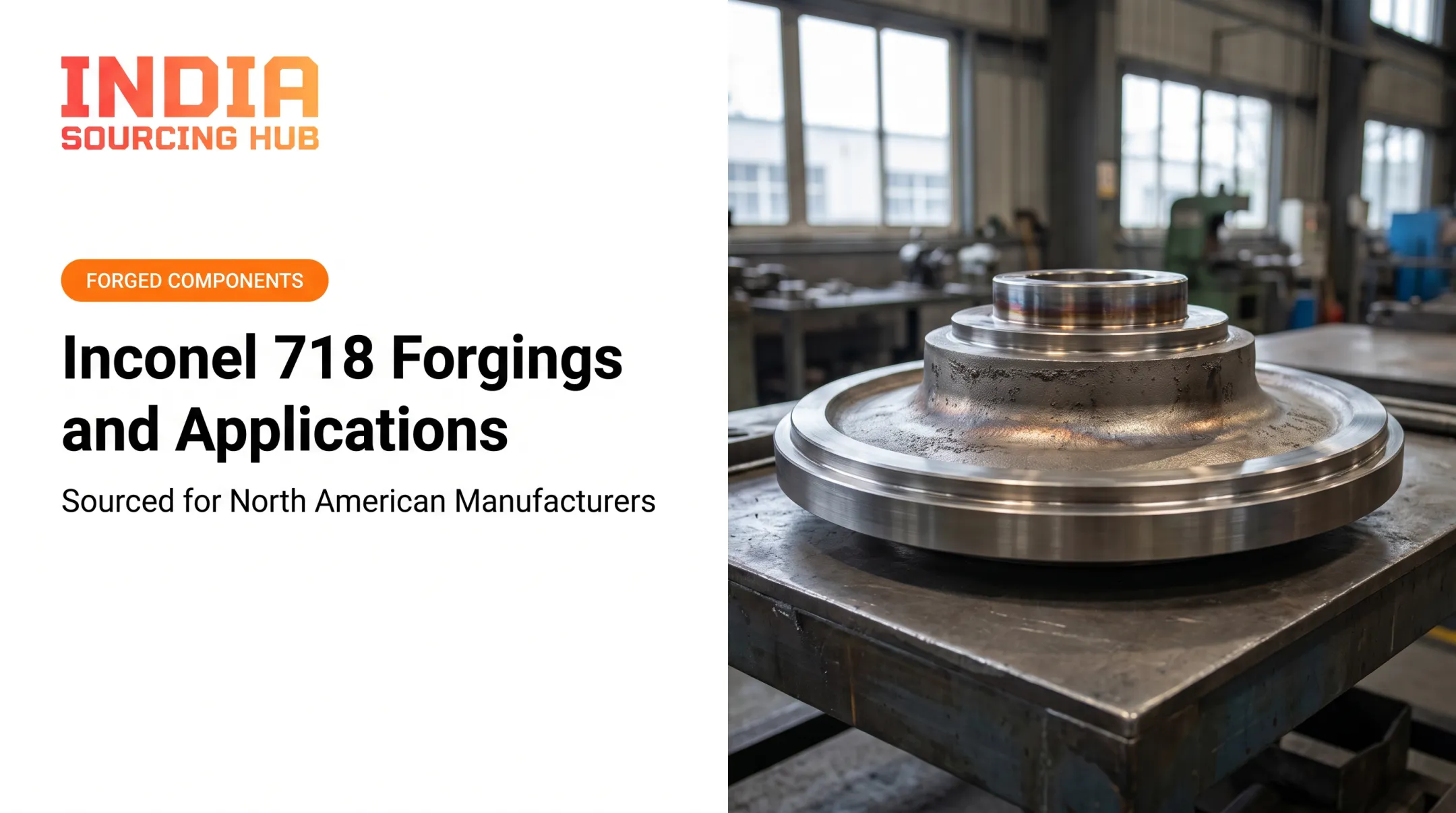

That's one reason steel forging keeps showing up in safety-critical automotive components. Forging gives engineers a dense, tough starting blank — one with grain structure that follows the part's shape — before heat treatment and machining finish the job.
This guide covers what steel forging actually is, which automotive parts commonly get forged, how the process works, how it compares with casting and machining, and what to specify when sourcing forged components for a production program.
Key Takeaways
- A forging is a shaped blank, not a finished part — most forged car parts still need heat treatment, CNC machining, and inspection before they're vehicle-ready.
- Steel grade, grain flow, heat treatment, and quality control affect performance more than the word "forged" by itself.
- Forging fits safety-critical, high-load, shock-sensitive, and fatigue-prone applications best.
- Sourcing decisions should weigh the entire process chain, not unit price alone.
What Are Steel Forged Car Parts?
The Forging Industry Association describes forging as pressing, pounding, or squeezing metal into shape under pressure. The stock is never melted and poured the way it is in casting. Steel can be forged hot, warm, or cold, depending on the grade and the shape required.
That matters because "hot" versus "cold" describes working temperature, not a different material or a stronger process by default. A cold-forged bracket and a hot-forged steering knuckle are both forgings, just made under different conditions.
From Blank to Finished Part
A forged blank rarely rolls straight into a vehicle. Before it's ready for assembly, it typically needs:
- Trimming to remove flash left over from the die
- Heat treatment to set hardness and mechanical properties
- CNC machining for bores, threads, and mounting faces
- Surface treatment such as shot blasting, coating, or plating
- Dimensional inspection against the engineering drawing
Skip any of these steps and "forged" stops meaning much on its own.
Why Steel Gets the Call
Carbon, microalloyed, and alloy steels make up the largest-volume group of automotive forging materials. Deformation during forging can improve directional strength, impact toughness, and fatigue resistance when the part is designed and heat-treated correctly.
A frequently cited SAE study on microalloyed steel in truck front axles found gains in yield strength, fatigue performance, and machinability compared with a quenched-and-tempered SAE 1055 alternative. Those results apply to the grades studied, not to every steel forging automatically.
Good forging design aligns material flow with the part's high-stress regions and avoids abrupt changes in section thickness. Get that wrong, and forging alone won't save a bad geometry.

Forging also doesn't guarantee superiority over every cast or machined alternative. Final performance depends on alloy selection, part geometry, process control, heat treatment, defect levels, tolerances, and actual service conditions.
The categories covered next (suspension and steering, wheel-end, drivetrain, engine, transmission, and selected chassis parts) are where steel forging earns its reputation most consistently.
Common Automotive Applications for Steel Forged Parts
Suspension and Steering Components
Suspension and steering components face road shock, bending loads, impact, and fatigue cycles every time a vehicle moves. Alignment tolerances leave little room for error, which is why these parts are frequent forging candidates.
Common examples include:
- Steering arms, knuckles, spindles, and ball studs
- Tie-rod-related parts and control-arm components
- Suspension links
Bharat Forge's drop-forged truck steering knuckle, which integrates a steering arm and uses heat-treated AFP steel, is one documented production example.
Wheel-End, Chassis, and Drivetrain Parts
Wheel-end and chassis components (hubs, axle parts, and wheel carriers) carry bearing interfaces and direct wheel loads. Dimensional accuracy here affects bearing fit and long-term reliability, not just raw strength.
Drivetrain parts push the fatigue requirement even further:
- Axle shafts and drive shafts handle constant torque transmission and cyclic loading
- Yokes and transmission shafts require precise heat-treated hardness for durability
- Gears and differential components need consistent properties to resist pitting and wear
- Clutch-related parts face repeated engagement cycles
Engine and Transmission Components
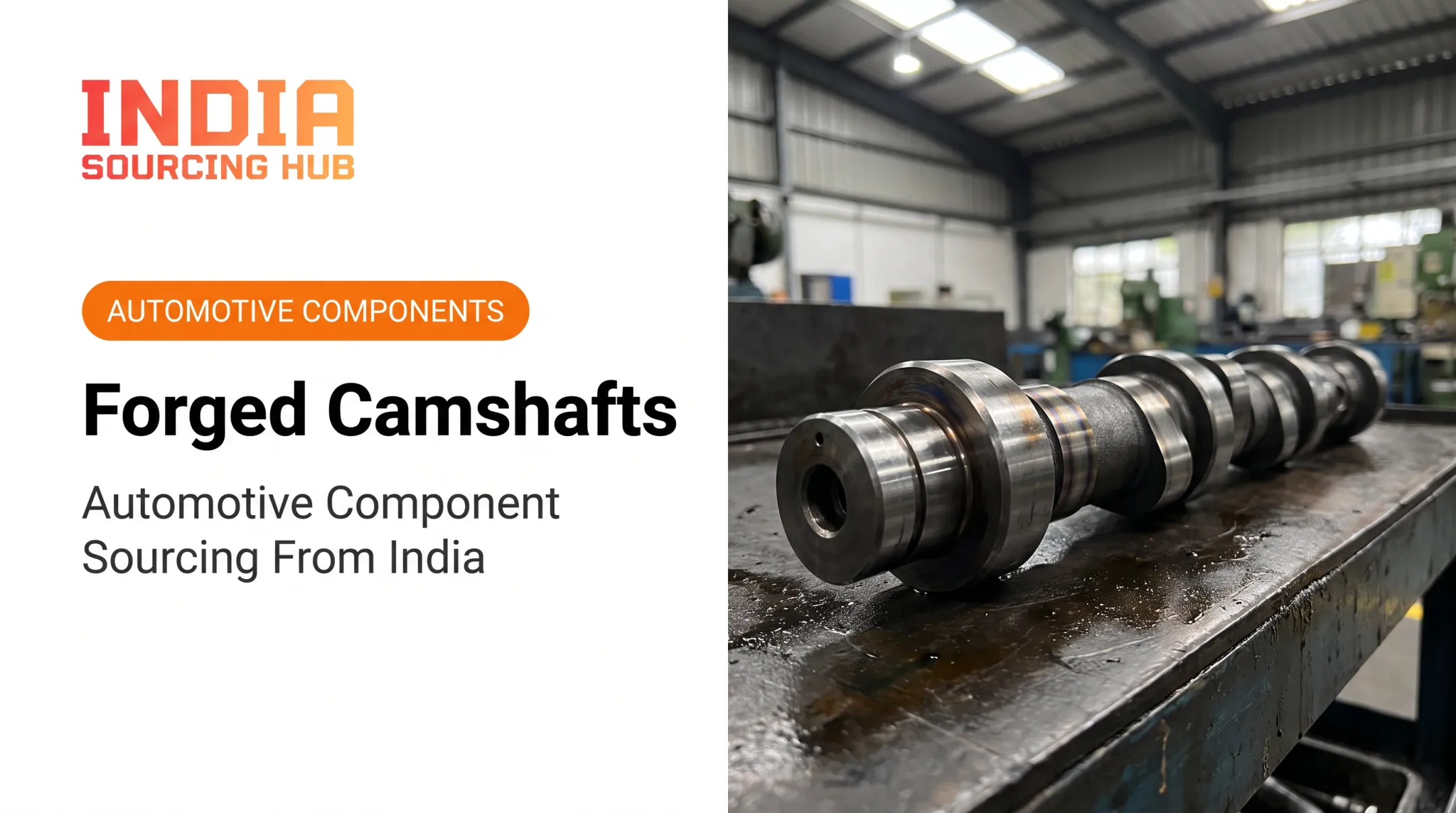
Connecting rods and crankshaft blanks are commonly forged from steel in passenger and truck engines, and thyssenkrupp lists both among its forged automotive components. Camshafts and rocker arms also frequently use forged construction, though the exact material and process vary by manufacturer and application.
In practice, forged component catalogs, including India Sourcing Hub's own line of forged automotive parts, typically cluster around wheel hubs, differential gears, synchronizer components, and connecting rods alongside steering and suspension parts.
When should a buyer investigate forging? Look for these signals:
- High cyclic loads or repeated impact in service
- Safety-critical function where failure isn't an option
- Significant material removal from a billet (a sign a forged near-net shape could save machining cost)
- A need for consistent mechanical properties after heat treatment
A 2015 statement from the Forging Industry Association to the US Senate Finance Committee noted that a single car or truck may contain roughly 250 forgings. That figure illustrates how often the process shows up in a typical vehicle, though it is not a precise current average or a steel-specific count.
How Steel Forged Car Parts Are Made
Steel forged car parts move from billet to finished component through a controlled sequence of forming and finishing steps. A representative production route looks like this:
- Select and cut steel billet to size
- Heat the billet (for hot forging routes) and descale the surface
- Preform the shape where the geometry requires it
- Forge in dies using a hammer or press
- Trim flash from impression-die parts
- Apply heat treatment per the part specification
- Shot blast or clean the surface
- CNC machine critical features
- Inspect and apply protective finishing

Not every part runs through all nine steps. A small cold-forged bracket, for example, skips heating entirely.
The Main Forging Process Families
Classification schemes for forging processes vary by source. Using the Forging Industry Association's categories, four headings cover most automotive steel work:
| Process | What It Involves | Automotive Relevance |
|---|---|---|
| Impression-die forging | Stock flows between shaped dies with constrained material movement | The dominant method for repeatable automotive shapes like control arms |
| Cold forging | Forming at room to moderately elevated temperature | Smaller, precision parts where tight tolerances matter |
| Open-die forging | Dies compress stock without full lateral confinement | Large sections; limited use in high-volume car parts |
| Seamless rolled-ring forging | A pierced workpiece is rolled into a ring shape | Ring-shaped components where geometry supports it |
This list mixes tooling design (impression-die, open-die) with working temperature (cold forging). It's one working classification, not a universal standard, so always confirm which system a supplier or spec is using.
Inspection, Machining, and Finish
Post-forging controls typically include:
- Hardness testing
- Dimensional inspection
- Heat-treatment verification
- Material traceability
- Checks for laps, cracks, or inclusions
Non-destructive testing applies where the part specification calls for it.
CNC machining then establishes the features a forged shape alone can't reliably hold: critical bores, threads, bearing seats, and mounting faces. This is where a forged blank becomes a finished, installable car part.
Forged vs. Cast vs. Machined Automotive Parts
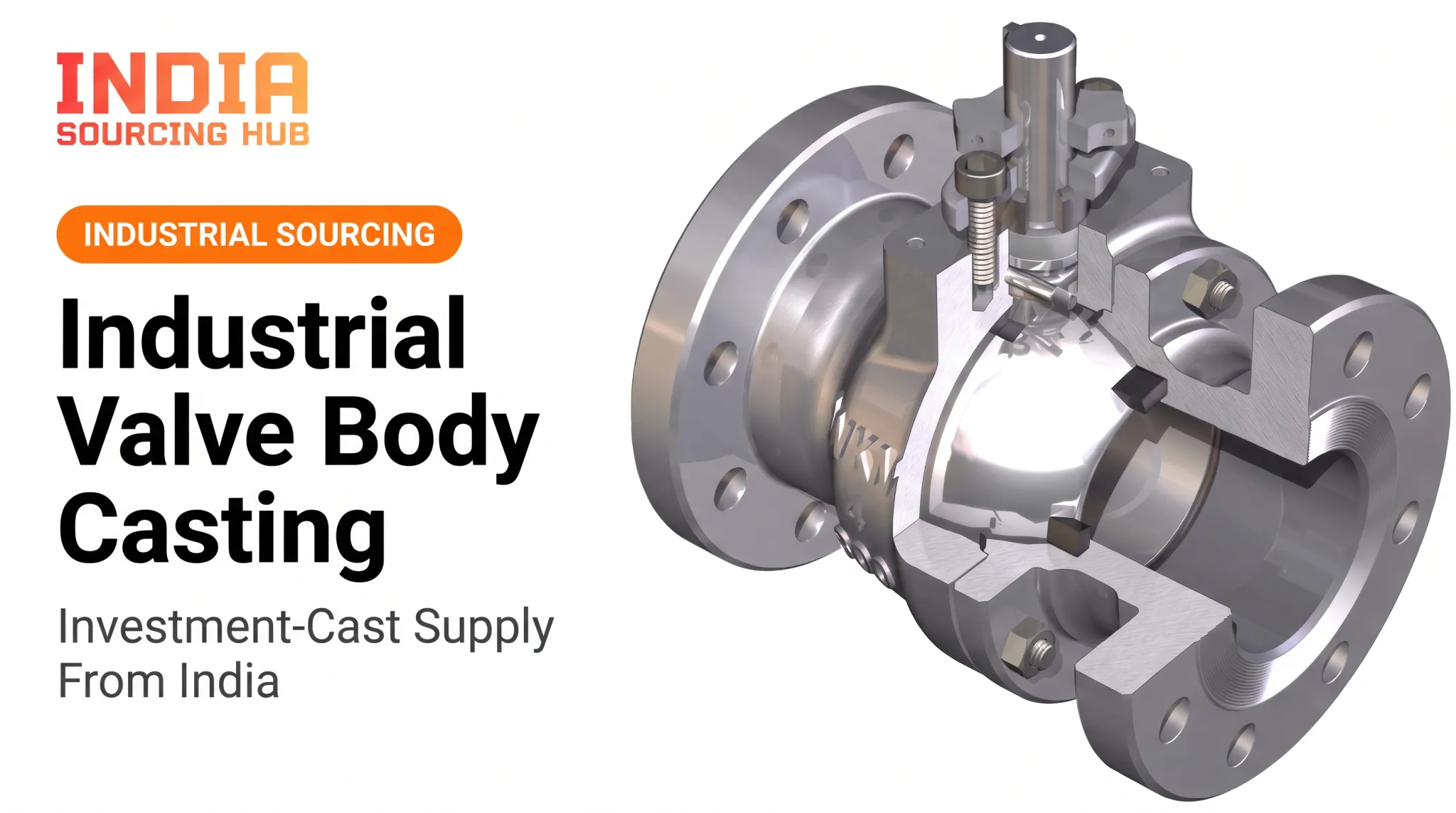
Casting fills a mold with molten metal, which supports complex internal and external shapes but carries porosity risk.
Forging plastically deforms solid steel, which can orient grain flow along the part's shape and support directional strength and fatigue resistance in a correctly designed part.
Machining from solid bar or billet delivers precise geometry and suits prototypes or lower production volumes well. The tradeoff: it removes more material and can cut across existing grain flow rather than preserving it.
Is Forging Stronger Than Casting?
Not automatically. A properly designed, well-controlled forging can offer real advantages in toughness, fatigue life, and resistance to certain internal defects. But the outcome still depends on alloy choice, part geometry, heat treatment, casting quality, and actual service loads, not the manufacturing method alone.

What's Stronger, Forged or Machined?
This comparison needs reframing. Machining is a material-removal process, not a competing material structure. The real comparison is machined-from-billet versus forged-and-machined. For high-load automotive parts, a forged blank with its oriented grain flow is usually the preferred starting point before machining finishes the critical features.
Buyer Comparison Table
| Factor | Forging | Casting | Machining |
|---|---|---|---|
| Strength/fatigue fit | Strong for cyclic, high-load parts | Good for complex shapes, moderate loads | Depends on base stock, not the removal process |
| Shape complexity | Moderate | High | High, with design flexibility |
| Tooling investment | High (dies) | Moderate to high (molds) | Low to moderate |
| Best production volume | Medium to high | Medium to high | Low to medium |
| Material utilization | Moderate | High | Lower (more scrap) |
Casting often wins when a part needs highly complex internal or external geometry that forging dies can't produce economically. Machining often wins for prototypes, low-volume runs, or designs still going through iteration.
Choose the process from the load case and economics, not from which method sounds more impressive:
- Load case and fatigue demand
- Geometry and tolerances
- Annual volume and tooling cost
- Steel grade and downstream machining
- Validation requirements
How to Source and Specify Steel Forged Car Parts
A usable quote starts with a clear engineering package. Send:
- 2D drawing and 3D model, with revision level clearly marked
- Material specification (steel grade or equivalent standard)
- Annual and batch quantities
- Intended vehicle or system application
- Critical-to-function dimensions flagged explicitly
Material and Process Details to Specify
Beyond the drawing, spell out:
- Billet condition and forging temperature range, where relevant
- Heat-treatment condition and target hardness or mechanical properties
- Surface condition and machining allowance
- Permissible defect limits
Inspection and Documentation
Confirm which quality framework applies before production starts. Many automotive customers reference IATF 16949 for quality management and AIAG's PPAP process to confirm a supplier's production process can consistently meet requirements at full rate. Ask for:
- Certificates of analysis and heat-treatment records
- Dimensional and hardness reports
- Non-destructive testing results where specified
- Material traceability and sample approval documentation
Commercial and Logistics Considerations
Before committing, clarify:
- Tooling ownership
- Minimum order quantities
- Prototype-versus-production pricing
- Lead time, packaging, and shipping terms
- Import responsibilities and inventory strategy
A contingency plan for delays matters as much as the unit price.
When you evaluate an overseas supplier, weigh:
- Relevant experience with similar forged parts
- Documented process controls and inspection capacity
- Sample quality and communication responsiveness
- Corrective-action procedures and production consistency
- References from comparable automotive work
A certificate alone does not prove those controls are in place.
This is where India Sourcing Hub fits in. Since 1995, the company has connected North American manufacturers with Indian metal-product suppliers and managed technical sourcing and quality requirements along the way.

For forged automotive components, that support typically includes:
- On-staff engineers in India inspecting production runs
- Third-party factory inspection during supplier selection
- Warehousing in Chicago, Toronto, and India for flexible inventory holding
- All-in pricing that simplifies supplier comparisons
For buyers under tariff pressure on China-sourced parts, it is also a documented alternative path.
RFQ Checklist
Before requesting a quote, have this ready:
- Drawing or 3D model with revision level
- Steel grade and heat-treatment condition
- Annual and batch quantities
- Critical tolerances and inspection requirements
- Finishing specification
- Tooling expectations and ownership terms
- Packaging, delivery location, and target schedule
If you need help identifying a qualified supplier, following up on quality issues, or coordinating logistics, reach out to India Sourcing Hub or call 416-805-8132.
Conclusion
Steel forged car parts earn their place where strength, toughness, fatigue resistance, and predictable performance under repeated load actually matter. Not every component needs that premium.
The right process decision considers the full route: steel selection, forging, heat treatment, CNC machining, inspection, and delivery. Skip a step in that chain, and the word "forged" on a spec sheet won't mean much on the road.
When comparing suppliers, weigh more than unit price:
- Technical capability
- Quality evidence
- Total landed cost
- Communication
- Fulfillment reliability
Choose the process and partner that hold up after the part leaves the dock—not only on the quote.
Frequently Asked Questions
Is forging stronger than casting?
Forging usually wins on toughness, fatigue life, and material continuity when the design and steel grade fit the job. Final strength still depends on alloy, geometry, heat treatment, and process quality on either side.
What is stronger, forged or machined?
Machining removes material; it isn't a competing material structure. Compare machined-from-billet against forged-and-machined instead. For high-load parts, a forged blank's grain flow typically gives it the edge before machining.
What is automotive forging?
Automotive forging shapes steel under pressure rather than casting it from molten metal. Common examples include shafts, hubs, steering knuckles, suspension links, gears, connecting rods, and crankshafts.
What are the four types of forging?
Classifications vary by source. The Forging Industry Association groups them as impression-die, cold forging, open-die, and seamless rolled-ring forging. That mix reflects tooling type and working temperature, not one universal system.
What steel car parts are commonly forged?
Forged steel is common anywhere cyclic load, impact, or safety margin matters: chassis and suspension links, wheel-end hubs, powertrain shafts and gears, and engine rotating parts. Process choice still tracks design, alloy, volume, and performance targets.
What should I include in a steel forged car parts RFQ?
Include enough detail for a comparable quote:
- Drawing or model, steel grade, and quantities
- Heat-treat condition, critical tolerances, and inspection needs
- Finishing, tooling expectations, packaging, ship-to location, and target schedule