
Introduction
A centrifugal pump lives or dies by what happens in the few inches of space between the impeller tip and the casing wall. That spiral-shaped passage, the volute casing, determines how smoothly the pump converts spinning fluid into usable pressure.
Many engineers and sourcing teams use "volute" and "pump casing" interchangeably. They're not the same thing, and that confusion causes real problems when specifying replacement parts or new production units.
This article covers how volute casings work, the major design variations, material and manufacturing considerations, and what to check before you source one. If you're an OEM engineer, maintenance planner, or procurement professional matching a casing to a duty point, you'll get practical detail you can use on the next spec or RFQ.
Key Takeaways
- The volute collects impeller discharge and converts velocity into pressure at the nozzle.
- Match casing geometry to impeller size, flow, head, and fluid to limit vibration and cavitation.
- Single vs. double volute, split orientation, and discharge layout drive radial load and access.
- Casting quality, machining accuracy, and traceability matter as much as basic shape.
What Is a Volute Casing in a Centrifugal Pump?
A volute casing is the stationary, spiral-shaped chamber that surrounds the impeller. According to KSB's pump lexicon, it collects liquid at the impeller periphery, guides it toward the discharge nozzle, and converts kinetic energy into static pressure.
Volute vs. Pump Casing: Why the Distinction Matters
"Pump casing" is the broader term. It covers the entire pressure-retaining housing: suction and discharge connections, covers, split-case sections, and mounting features. A volute is one specific internal hydraulic form that a casing can take. KSB treats the casing as the pressure boundary and the volute as a configuration within it.
Getting this wrong during sourcing leads to mismatched quotes and wasted engineering review time. When you ask a supplier for a "volute," make sure they understand whether you need just the spiral passage geometry replicated or the full casing assembly with flanges, wear rings, and seal chambers included.

Interfaces That Affect Fit and Performance
A few dimensional relationships determine whether a replacement casing will actually work:
- Impeller eye and outer diameter — clearance here affects recirculation
- Shaft centerline — misalignment here cascades into seal and bearing problems
- Wear surfaces — rings and plates that maintain running clearances
- Suction inlet and discharge nozzle — must match piping without forced alignment
- Shaft seal area — geometry here affects packing or mechanical seal life
- Casing joints — gasket surfaces that determine leak-free assembly
Each of these needs to be validated against the drawing, not assumed from a part number match.
How Does a Volute Casing Work?
The fluid path through a volute casing follows a consistent sequence, regardless of pump size or application.
- Liquid enters the impeller eye near the shaft centerline.
- The rotating impeller adds velocity and energy to the fluid through centrifugal force.
- Fluid exits radially off the impeller tip into the surrounding volute passage.
- The expanding passage collects this flow and redirects it toward the discharge nozzle.
The Diffusion Mechanism
Here's the part that trips up a lot of people new to pump hydraulics: the volute's cross-sectional area generally increases as you move around the casing toward the discharge.
According to the DOE Fundamentals Handbook on pumps, this expanding area reduces fluid velocity, and that velocity reduction converts kinetic energy into static pressure. It's a straightforward energy trade, but the geometry has to be right or the trade doesn't happen efficiently.
The volute never works in isolation. Final head and flow depend on the combined hydraulic design: impeller geometry, shaft speed, internal clearances, suction conditions, and the connected piping system.
A volute sized correctly for one impeller won't necessarily perform the same way with a different one, even if the outer dimensions look similar.

Pressure Distribution and Radial Thrust
Volute geometry directly affects pressure distribution around the impeller. When a pump operates away from its best-efficiency point (BEP), internal pressure becomes nonuniform.
The Hydraulic Institute notes that radial thrust is typically lowest at BEP and increases as operation shifts toward shutoff or overload conditions. That growing imbalance translates into higher loads on the shaft and bearings over time.
Signs of Mismatch or Wear
Watch for these indicators during operation and inspection:
- Unstable flow or pressure readings
- Excessive vibration, especially at off-design flow rates
- Abnormal noise, including cavitation-related crackling
- Elevated bearing or seal loads
- Visible erosion or pitting on the casing interior
- Operation consistently far from the design point
None of these symptoms points to a single cause on its own. Casing erosion could stem from abrasive solids, cavitation, or simple age. Treat these as prompts for investigation, not diagnoses.
Volute Casing Designs and Configurations
Not every volute casing looks or behaves the same way. The right configuration depends on pump size, duty cycle, and how much flow variation the application expects.
Single Volute vs. Double Volute
A single-volute casing uses one continuous spiral passage. It's simpler to cast and machine, which keeps costs down for smaller pumps or applications with a stable operating point.
A double-volute casing splits the flow into two passages positioned opposite each other around the impeller. This arrangement helps balance circumferential pressure and reduce radial thrust, particularly in larger pumps or those expected to run across a wider flow range.
Flowserve's LNN line is a documented example. Its double-volute design minimizes radial force down to the pump's minimum-flow condition and reduces shaft deflection as a result.
The tradeoff is complexity. Double volutes cost more to produce and can introduce a small efficiency penalty at the design point. Neither configuration is universally "better"; it depends on your duty profile.

Volute vs. Diffuser Casing
A diffuser casing uses stationary vanes instead of an expanding spiral to recover pressure. Sulzer's comparison of multistage diffuser and volute models found the diffuser casing simpler in some respects but requiring an additional interstage cover and sealing arrangement.
That's a specific comparison between particular models, not a blanket rule. Diffuser designs tend to show up in multistage pumps where consistent pressure recovery across several stages matters more than simplicity.
Split-Case Arrangements
| Split Type | Joint Orientation | Maintenance Access |
|---|---|---|
| Axial (horizontal) split | Along the shaft centerline | Top half lifts off; piping often stays connected |
| Radial split | Perpendicular to the shaft | Casing separates end-to-end; different access pattern for seals and bearings |
The axial-split approach is common in larger process pumps because it lets technicians pull the rotating element without disturbing suction and discharge piping.
Discharge Layout and Installation Implications
Casing layout terms show up constantly in specs, and they carry real installation consequences:
- Tangential discharge: outlet positioned off the volute body itself
- Top centerline discharge: often specified as self-venting, which matters for air removal during startup
- End suction: inlet nozzle typically axial, at the casing end
- Double suction: fluid enters from both sides of the impeller, reducing axial thrust
Don't assume these terms define piping connections by name alone. Always check the actual connection drawing for the model in question.
Recessed Impeller and Solids-Handling Designs
Some applications involve solids or stringy material that would clog a standard clean-liquid volute. A recessed impeller design, where the impeller sits outside the direct flow path, creates an enlarged passage that lets solids pass through with less interference.
This is a specialized configuration. Don't assume every volute pump handles solids well just because the casing looks similar from the outside.
Materials, Manufacturing, and Quality Considerations
Casing material selection ties directly to pressure rating, temperature, corrosion exposure, abrasion from solids, and the chemistry of the pumped fluid.
Common Material Families
| Material | Typical Use Case |
|---|---|
| Gray cast iron | General-purpose, moderate pressure and temperature |
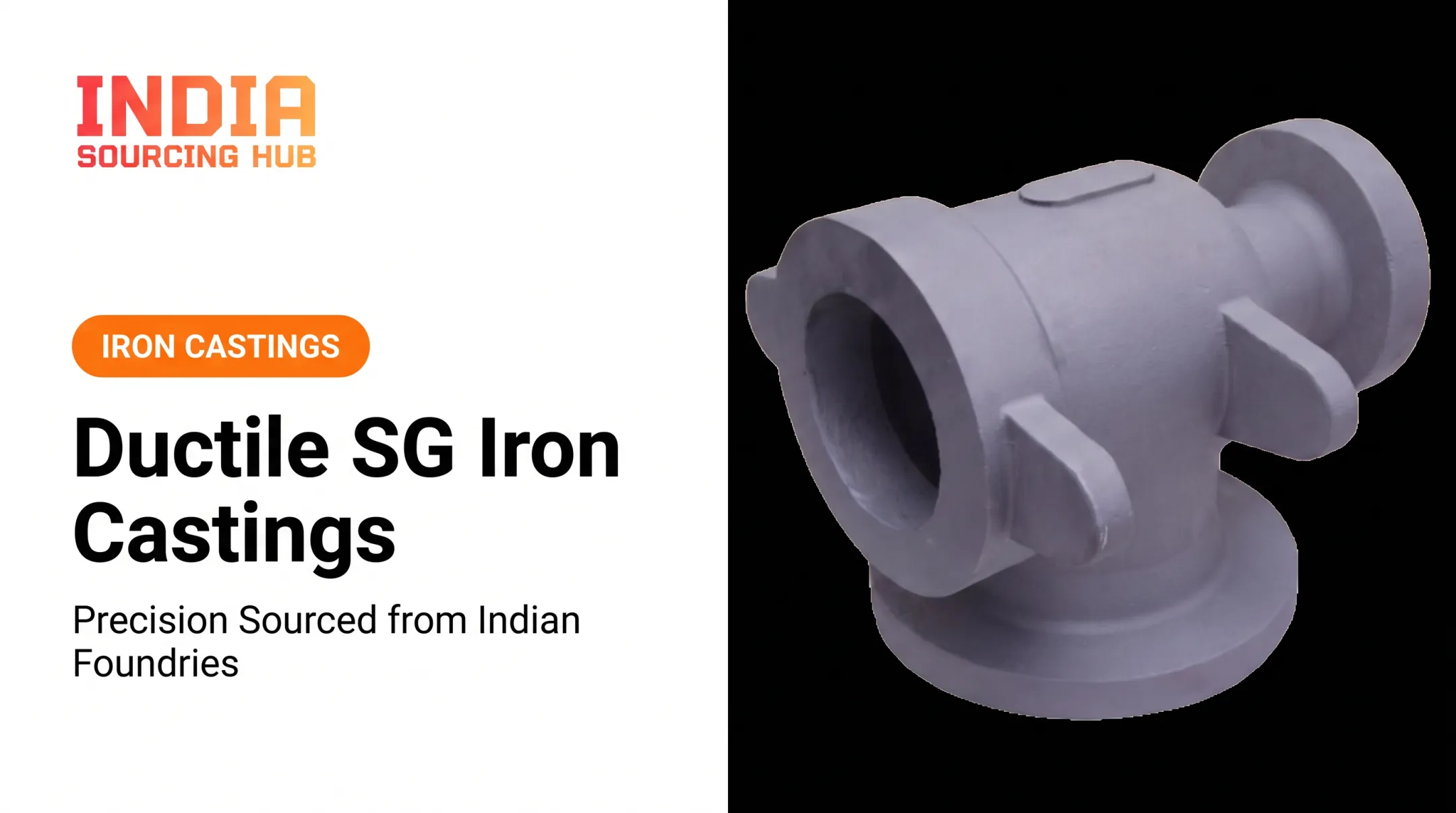
| Ductile iron | Higher strength and toughness than gray iron |
| Carbon steel | Higher-pressure or higher-temperature service |
| 316 stainless steel | Corrosive fluids, common in process pump lines |
| Duplex stainless steel | High corrosion resistance with added strength |
Goulds specifies 316 stainless steel and duplex grades like CD4MCuN specifically for its 3196 casing line, while other models in the same catalog use cast iron or carbon steel. Material selection is model-specific, not a generic choice just because the part is a pump casing.
The Casting and Machining Workflow
A typical volute casing moves through these stages:
- Engineering review of the drawing and tolerances
- Pattern or tooling preparation
- Molding and metal pouring
- Cooling and shakeout
- Fettling (removing excess material)
- Heat treatment, where specified
- Rough and finish machining
- Inspection
- Coating and final assembly checks
Each stage introduces an opportunity for error, which is why inspection discipline matters as much as the casting process itself.
Quality Risks to Watch For
Casting and machining defects that affect volute performance include:
- Porosity and shrinkage voids in the casting
- Inclusions or cracks from the pouring process
- Distortion during cooling
- Uneven wall thickness
- Poor surface finish on hydraulic passages
- Misaligned bores or incorrect machining datums
- Dimensional variation at flange or seal interfaces
The Steel Founders' Society of America flags internal gas porosity and shrinkage porosity specifically as defects that often require radiography or ultrasonic testing to catch, since they're not visible from the surface.
Documentation to Request from Any Supplier
Before accepting a sourced casing, ask for:
- Controlled drawings matching the current revision
- Material certificates (chemistry and mechanical properties)
- Dimensional inspection reports
- Non-destructive testing results, where specified
- Hydrostatic or pressure test records
- Surface-finish results on critical passages
- Coating and heat-treatment records
- Part traceability back to the casting lot
At India Sourcing Hub, we source pump parts including impellers, volutes, and bodies. Our engineers in India inspect production runs before shipment.
We also arrange third-party factory inspection as a standard step—practical when you are buying a casing overseas and cannot walk the supplier's shop floor yourself.
How to Specify, Maintain, and Source a Volute Casing
Specification Checklist
Before requesting a quote, nail down these parameters:
Operating duty and fluid
- Required flow rate and head
- Shaft speed
- Fluid density, viscosity, and temperature
- Solids content or particle size, if applicable
- Corrosiveness of the pumped fluid
- Suction conditions (NPSH available)
Construction and quality
- Material and pressure rating
- Flange standard (ANSI, DIN, etc.)
- Critical dimensions and tolerances
- Split orientation
- Wear allowances and surface finish
- Coating and inspection requirements
Skipping any of these invites a casing that fits the drawing but not the actual operating duty.
Maintenance Checks During Shutdowns
Routine monitoring should track pressure, flow, vibration, noise, temperature, and any leakage or unusual power draw. During planned shutdowns, inspect:
- Casing joints and gaskets for leakage paths
- Wear rings and impeller clearances
- Seal areas for wear or damage
- Interior surfaces for erosion, corrosion, or deposit buildup
Compare findings against the pump's documented operating point. A casing showing wear patterns inconsistent with its duty cycle often points to a system problem, not just component age.
Sourcing Through India Sourcing Hub
For North American manufacturers buying cast and machined volute casings, the sourcing decision usually comes down to three things: quality consistency, lead time, and cost — especially with tariffs reshaping where parts come from.
We've sourced metal products for North American manufacturers since 1995. Our India factory network has met stringent quality standards since 2013. For pump components specifically, our role includes:
- Connecting buyers to vetted Indian foundries and machine shops producing impellers, volutes, and casing bodies
- Managing factory-side quality inspection, including third-party checks before shipment
- Coordinating import logistics from order through delivery
- Holding inventory in Chicago and Toronto, backed by our Rajkot manufacturing network, so minimum order quantities are less of an obstacle
- Sourcing parts without the 25% tariffs that currently apply to China-made components
We're not the pump manufacturer, and we don't claim certifications we haven't been given. What we handle is the supply chain layer: finding the right factory, verifying the work, and getting the parts to your dock on a schedule you can plan around.

Frequently Asked Questions
What is the purpose of the volute casing in a centrifugal pump?
The volute collects liquid discharged by the impeller and guides it toward the outlet. As it does, the expanding passage slows the fluid and converts velocity energy into static pressure.
What is the difference between a pump casing and a volute?
A volute is the spiral hydraulic passage inside the pump. "Pump casing" is the broader term, covering the full pressure boundary, suction and discharge nozzles, covers, and split sections.
What is the purpose of the casing in a pump?
The casing contains and directs fluid flow while withstanding internal pressure. It houses the hydraulic passages and connection points, and guides flow from the impeller to the discharge nozzle.
What is the difference between a single-volute and double-volute casing?
A single-volute casing uses one expanding passage and works well for stable, smaller-duty applications. A double-volute casing splits flow into two passages to help balance radial forces in larger or variable-flow pumps.
What materials are used to make centrifugal pump volute casings?
Common materials include cast iron, ductile iron, carbon steel, stainless steel, and duplex stainless alloys. The right choice depends on pressure, temperature, corrosion exposure, and the fluid being pumped.