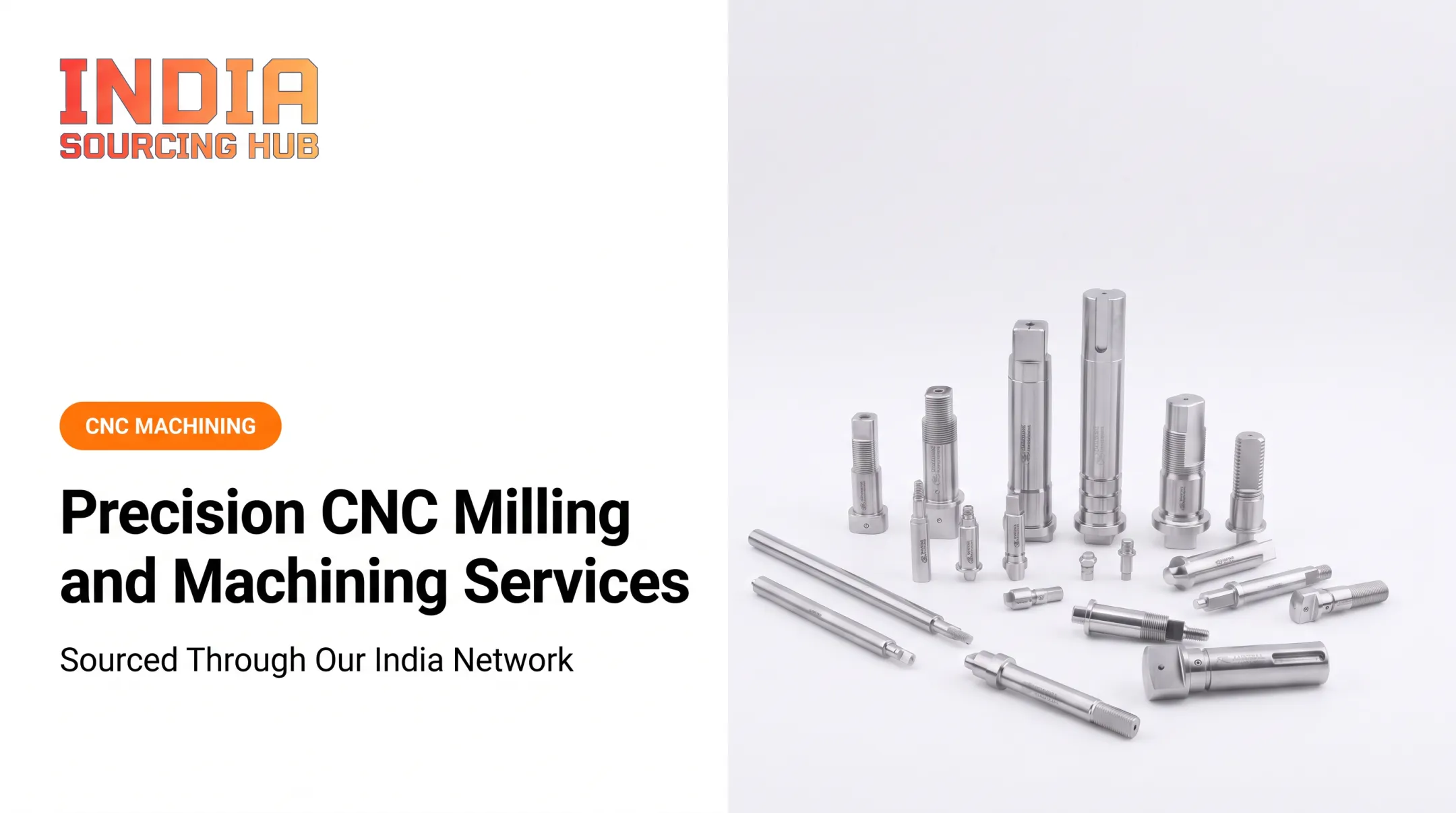
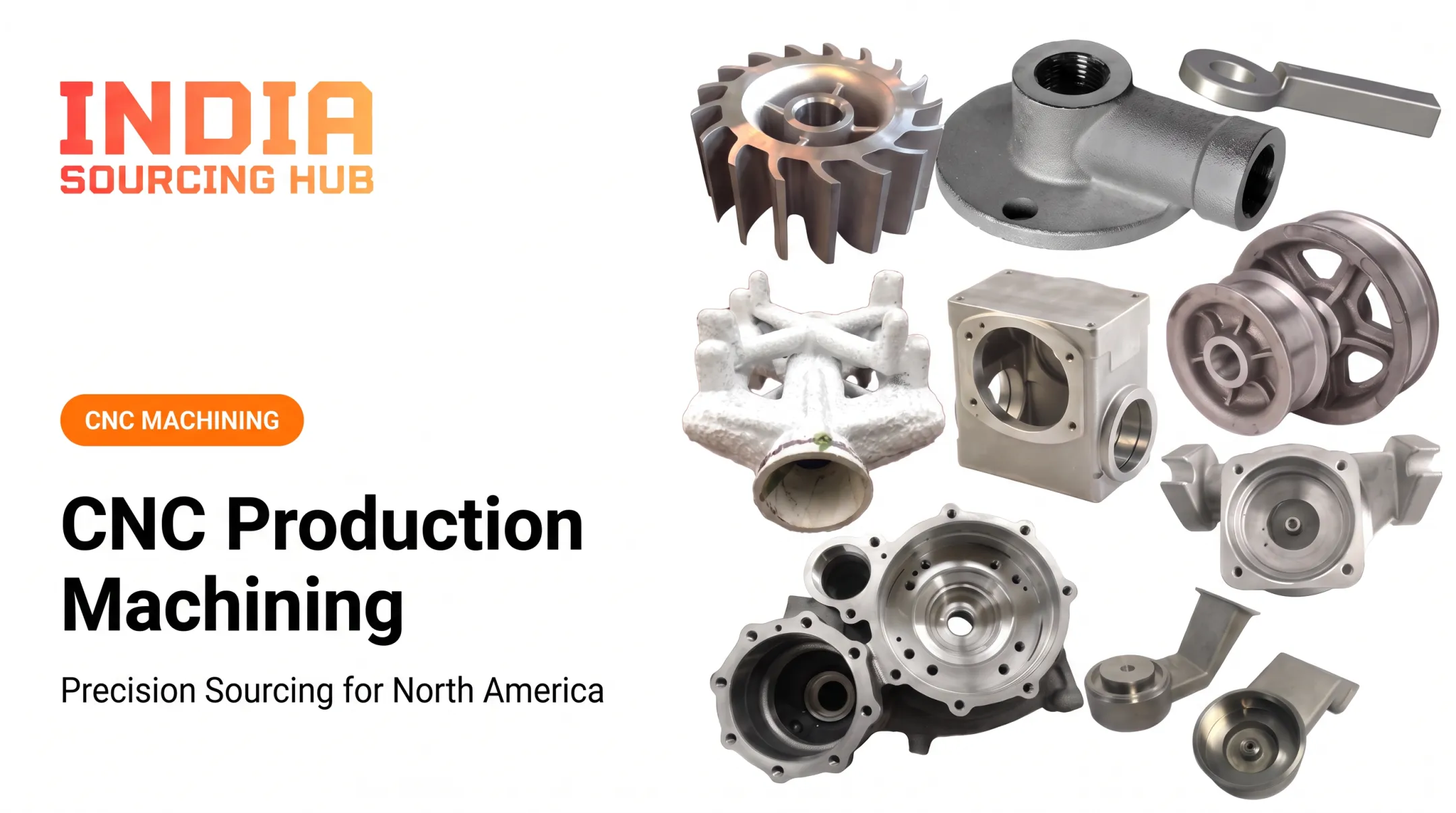
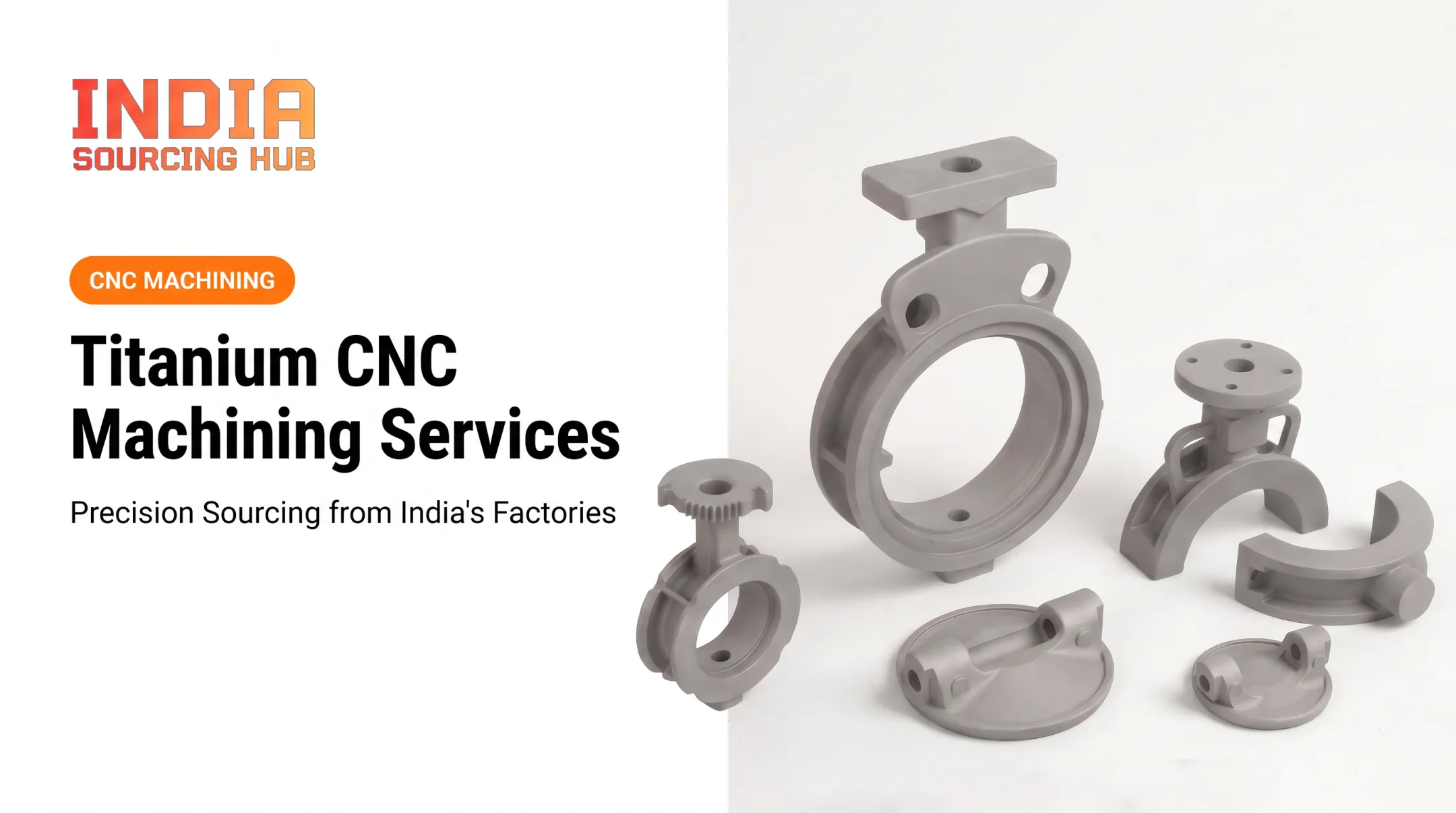
Low-volume CNC machining bridges that gap. It connects prototyping, product validation, bridge production, replacement-part sourcing, and recurring small-batch manufacturing without the capital outlay of tooling.
This guide covers what counts as low volume, when it makes sense, how the process works, what drives cost, and how to vet a supplier before you commit a purchase order.
Key Takeaways
- Low volume isn't one fixed number—it depends on the part, supplier, and production stage.
- Low-volume CNC machining fits best when designs may still change, demand is uncertain, or parts need production-grade materials.
- Setup time, material, tolerances, finishing, and logistics all shape your total cost.
- A complete RFQ and a supplier's quality practices matter as much as machine specs.
What Is Low Volume CNC Machining?
Low-volume CNC machining uses computer-controlled milling, turning, or related subtractive processes to produce small quantities of custom parts, without investing in molds, dies, or other dedicated tooling. A programmer writes instructions, a machine removes material from a solid block or bar stock, and you get finished parts without the lead time or upfront cost that casting or injection molding tooling requires.
There's no industry-wide cutoff for what counts as "low volume." According to JLCCNC's low-volume production guide, quantities generally range from single units up to around 1,000 parts. Many small-batch orders fall between 2 and 200 pieces.
Other shops define their own sweet spot. The right threshold for your project depends on your supplier's capacity, the part's complexity, and where you are in the product lifecycle.
Five Scenarios, Not One Definition
Low volume covers several distinct situations:
- One-off prototypes - a single part to validate fit or function
- Short production runs - enough units for a pilot batch or trade show demo
- Bridge production - interim parts while tooling or final design approval is pending
- Recurring small batches - periodic orders of 10 to 200 units for stable but limited demand
- Low-volume end-use parts - permanent production at quantities too small to ever justify tooling
CNC Machine vs. Service Provider vs. Machinist
These three terms get used interchangeably, but they're not the same thing. The CNC machine is the equipment itself. The CNC machining service provider is the business that owns the equipment, programs the jobs, and manages quality. The CNC machinist is the person who sets up fixtures, loads programs, monitors the cut, and checks dimensions. Knowing who's responsible for what helps you ask the right questions during quoting.
Once those roles are clear, the production path is straightforward:

- CAD model and drawing review
- CAM programming and workholding setup
- Machining, inspection, finishing, and delivery
Compared with high-volume processes like injection molding, CNC trades dedicated tooling's lower per-part cost for a digital program you can revise overnight.
Why Use Low Volume CNC Machining?
The biggest advantage is iteration speed. When your design changes, you update the CAD model and the machining instructions, not a $40,000 steel mold. That matters most during early development, when a revision might happen three times before a part is final.
Material realism is the second reason. Machining a prototype from the actual production-grade aluminum, stainless steel, or engineering plastic gives you a part that behaves like the real thing under load, heat, or wear, not just a shape you can look at.
Common Bridge-Production Scenarios
Those same strengths also let CNC fill the gap between prototype and full production:
- Early customer shipments - get working units to a key account before tooling is ready
- Market validation - test demand before committing capital to a mold
- Pilot runs - validate the manufacturing process itself at small scale
- Interim production - keep shipping while tooling is being built or a design is finalized
For U.S. industrial buyers, common applications include:
- Pump and valve components
- Automotive and truck parts
- Machinery components and custom enclosures
- Fixtures and replacement parts for legacy equipment no longer in catalogs
Use this checklist to gauge fit:
- Demand is uncertain or still being validated
- Engineering changes are frequent or expected
- The part is highly specific to your application
- You want to avoid tooling investment entirely
- You need production-equivalent material properties
- You only need a limited quantity, period
When It Doesn't Make Sense
CNC machining has real limits. Per-part cost stays relatively high at very small quantities because setup time gets spread across fewer pieces. Complex geometries can require multiple setups, adding cost and lead time. Once demand becomes stable and sufficiently large, casting, stamping, or molding usually beats machining on a pure per-unit basis.
How Does Low Volume CNC Machining Work?
A clean technical package prevents most quoting delays. Send your supplier a 3D CAD model, 2D drawing, revision level, material specification, tolerances, thread callouts, surface-finish requirements, quantity, inspection expectations, and delivery deadline.
From there, the supplier runs a design-for-manufacturability (DFM) review. That review typically checks:
- Tool access, internal radii, and wall thickness
- Deep pockets and workholding points
- Datum strategy and required setups or orientations
Milling, Turning, and Axis Count
- CNC milling handles prismatic parts: pockets, holes, slots, and contoured features
- CNC turning handles rotationally symmetric parts: shafts, bushings, pins, and fittings
- 3-axis machining suits simpler geometries with straightforward access
- 4- or 5-axis machining cuts setups on complex, multi-sided parts
Extra axes only help when geometry, tolerances, and setup time justify them.
Secondary Operations and Quality Checks
Many parts need work beyond the machine. Common secondary operations include:
- Deburring, heat treatment, and surface finishes (anodizing, plating, powder coating, passivation)
- Laser marking, assembly, and kitting
Confirm availability and lead-time impact with your supplier before you finalize a quote.
Quality control typically includes:
- First-piece or first-article review before full production
- In-process checks during the run
- Final dimensional inspection against the drawing
- Material certification documentation
- A certificate of conformity, where your application requires one
A small initial batch validates the design. Repeat orders then reuse saved programs, fixtures, and inspection plans, which tightens consistency on every order that follows.

When you request a quote, ask for pricing at two or three realistic quantity levels. That comparison shows how setup-cost amortization changes your unit price.
Materials, Finishes, and CNC Processes
Material choice drives strength, corrosion resistance, weight, wear characteristics, and machinability, all at once. There's no single best option.
| Material | Strengths | Trade-offs |
|---|---|---|
| Aluminum 6061 | Good machinability, weldable, naturally corrosion-resistant | Lower strength than 7075 |
| Aluminum 7075 | Higher strength, ideal for demanding structural parts | Harder to machine, poor weldability |
| Stainless 304 | Easier to machine, good general corrosion resistance | Less resistant in chloride environments |
| Stainless 316 | Better chemical and marine corrosion resistance | Slower to machine, higher tool wear |
Harder-to-machine materials increase cycle time, tool wear, and inspection requirements, which shows up in your quote even before you account for raw material cost.
Specify finishes by function, not habit:
- Appearance requirements (cosmetic grind, bead blast)
- Corrosion protection (anodize, passivate, plate)
- Electrical requirements (conductive coatings)
- Wear resistance (hard coat anodize, nitriding)
Common CNC Processes for Low-Volume Runs
Low-volume runs typically draw on a handful of core processes, chosen by part geometry and tolerance needs:
- CNC milling for brackets, housings, and plates needing flat faces and pocketed features
- CNC turning for cylindrical parts such as shafts, bushings, and fittings
- 5-axis machining for complex contours that would otherwise need multiple setups
- Wire EDM for hardened materials or tight internal corners standard cutters can't reach
Matching the process to the part early keeps lead times and machining costs predictable.
Avoid specifying tolerances tighter than ±0.001 inch, cosmetic finishes, or specialty alloys unless your application genuinely requires them. Every unnecessary spec adds cost without adding value.
How Much Does Low Volume CNC Machining Cost and How Can You Control Cost?
Your quote covers more ground than raw material and machine time. Full cost typically includes:
- Programming, setup, and workholding
- Material and tooling wear
- Inspection and finishing
- Packaging, freight, and duties
- Inventory or warehousing when you need it
Why Setup Cost Hits Small Orders Hardest
Setup is largely a fixed cost. Picture a job with a $300 setup charge: at five pieces, that's $60 added to each part's price. At fifty pieces, it's just $6 per part.
Based on cost modeling from Boothroyd Dewhurst's machining cost estimator, setup gets divided across your batch size, then added to material cost and machine rate times cycle time. Smaller batches absorb more of that fixed cost per unit.

What Drives Price Beyond Setup
Geometry and process choices push cycle time, tooling, and inspection cost up:
- Deep pockets and thin walls that slow down cutting speed
- Sharp internal corners requiring smaller tooling
- Difficult tool access needing extra setups
- Tight tolerances that demand slower passes and more inspection
- High material-removal rates on dense alloys
Reduce cost with these design changes:
- Use standard hole and thread sizes
- Keep internal radii practical, not razor-sharp
- Design features accessible from fewer orientations
- Build in stable workholding surfaces
- Limit tolerances to what the part actually needs functionally
Comparing Quotes the Right Way
Don't pick the lowest unit price and call it done. Compare total cost: inspection documentation, finishing, packaging, shipping, import costs, payment terms, and how rejected parts get handled. Ask each supplier to name their biggest cost driver and whether a design or material swap would bring it down.
Import source also matters here. Parts classified under certain headings face an additional 25% duty under current Section 301 tariff schedules, on top of the regular duty rate, depending on the part's classification and country of origin.
India Sourcing Hub sources CNC machined parts through its Indian factory network, which avoids that additional tariff layer. The company quotes all-in pricing from sample through final shipment.
A low unit price that excludes quality checks, finishing, freight, duties, or inventory holding isn't actually the cheaper option once you add everything back in.
How to Choose a Low Volume CNC Machining Supplier
Start with technical capability. Confirm experience with your materials and geometry, milling and turning capacity, and secondary operations. The shop should also carry a part from prototype through production without a handoff.
Review quality practices next:
- Revision control procedures
- Material traceability documentation
- First-article or first-piece inspection
- Nonconformance handling
- Calibration records
- Documentation included with each shipment
Communication fit matters as much as the machine list. Ask about:
- Response times
- Technical review during quoting
- Change-order handling
- Production updates
- Who owns packaging and shipping
Overseas Sourcing Adds Another Layer
If you're sourcing overseas, you're not just buying machining capability. You're also taking on import coordination, freight management, inventory holding, and delivery to your U.S. facility, unless your supplier handles that for you.
Since 1995, India Sourcing Hub has supported North American manufacturers with overseas metal-product sourcing. Its Indian supplier network has met the company’s quality requirements since 2013.
Engineers based in India inspect production runs before shipment. U.S.- and Canadian-based staff manage import and logistics details, with warehousing in Chicago and Toronto to hold inventory so minimum order quantities are less of an obstacle.
For manufacturers that don’t want to manage every overseas vendor detail themselves, that coordination layer often matters as much as the machining.
Before you commit, ask any supplier for:
- Comparable part experience, with references if available
- Documented quality evidence, not just a verbal assurance
- Realistic lead times, in writing
- Clear commercial terms, including what happens with rejects
- A plan for handling design changes mid-order
Frequently Asked Questions
What are the uses of CNC machines?
CNC machines produce prototypes, custom components, production parts, fixtures, tooling, repair parts, and small-batch runs. Machine and process choice follow the part’s geometry and material.
What is a CNC machinist?
A CNC machinist sets up, operates, and monitors computer-controlled machines, and may also program them. They interpret drawings, verify dimensions, manage tooling, and respond to quality or process issues during a run.
What quantity is considered low volume CNC machining?
The threshold varies by supplier and application. It spans one-off prototypes, short runs, bridge production, and recurring small batches, rather than one universal number.
What factors affect the cost of low volume CNC machining?
Setup, programming, material, part complexity, tolerances, quantity, finishing, and inspection all drive cost. Always compare complete quotes, not just unit price.
When should I choose low volume CNC machining instead of 3D printing or injection molding?
CNC machining works best when you need production-grade materials, functional testing, tight dimensional control, or a small batch. 3D printing suits rapid concept models, and injection molding fits stable, higher-volume demand.