Introduction
Producing a complex metal part that needs tight tolerances, a clean surface, and minimal machining sounds simple. Then you price it out.
Many manufacturers land on a casting quote that looks cheap, then watch the real cost climb once machining time, scrap rates, and inspection delays enter the picture.
Investment casting, also called precision casting or lost-wax casting, is built for that gap. Molten metal is poured into a ceramic shell formed around a disposable wax pattern. The result is intricate geometry and a smoother finish than many other casting methods allow, often with less secondary machining.
The US investment casting market was valued at $4,936.8 million in 2025, with Grand View Research projecting 4.3% annual growth through 2033. Manufacturers keep choosing it for parts other methods cannot produce economically.
This guide walks through what US buyers need to evaluate:
- How the process works, and which alloys and applications fit it
- Advantages, limitations, and what drives total cost
- How it compares with sand casting, die casting, forging, and CNC machining
- What to check before selecting a supplier
Key Takeaways
- Investment casting yields complex, fine-detail metal parts with smooth as-cast surfaces.
- It cuts machining time and consolidates parts, but tooling cost and lead time still matter.
- Drive decisions with geometry, alloy, tolerances, quantity, and total landed cost—not piece price.
- Review design and supply plans with a casting or sourcing pro before locking tooling.
How Does Investment Casting Work?
Investment casting moves a part from engineering drawing to finished metal through five linked stages: wax pattern creation, tree assembly, ceramic shell building, dewax and pour, and finishing. Each stage adds a variable that affects the final part, so a casting drawing needs to specify more than just nominal dimensions.

Create the Wax Pattern
A wax pattern reproduces the part's geometry, but not exactly. The pattern die accounts for metal shrinkage during cooling, machining stock on critical surfaces, and the gating system that will feed metal into the mold.
Fictiv's process guide describes a typical 1-2.5% shrinkage allowance built into the wax pattern, though the right figure depends on the specific alloy and should come from your foundry, not a generic chart.
Production tooling uses a hardened, reusable pattern die built to run thousands of parts. For prototypes or low-volume orders, foundries often use 3D-printed or soft-tooled patterns. These skip the die investment but usually cost more per part and can limit dimensional repeatability.
Build the Wax Tree and Ceramic Shell
Individual wax patterns attach to a central wax runner system, forming a tree that can hold dozens of parts for one pour. The tree then goes through repeated cycles of ceramic slurry dipping and stucco (refractory sand) coating, with drying time between each layer.
Shell thickness, drying conditions, and how densely the tree is packed all affect:
- Mold strength during dewax and pour
- How evenly metal fills thin sections
- The risk of shell cracking or casting defects
The Investment Casting Institute notes that incomplete drying between coats and inconsistent pressure during dewax are common causes of shell cracking.
Remove the Wax and Pour the Metal
Dewaxing, usually done in a steam autoclave, melts the wax out of the shell, leaving a hollow ceramic mold. The shell then goes through a burnout step to remove residual wax and moisture before it's ready for metal.
Shells are typically preheated before the pour to reduce thermal shock and help metal fill thin sections before it solidifies. Exact preheat and pour temperatures vary by alloy chemistry and foundry equipment, so confirm exact temperatures with your supplier rather than treating generic figures as fixed rules.
Finish and Inspect the Casting
Once the metal solidifies, the foundry breaks away the ceramic shell and cuts parts from the tree at the gates and runners. From there, finishing operations may include:
- Grinding and cleaning gate marks
- Heat treatment, where specified
- Machining of critical features or mating surfaces
- Final inspection
The right inspection plan depends on the part's function. It may be a simple visual and dimensional check, or it may include chemical analysis, mechanical testing, and non-destructive testing such as X-ray or dye penetrant. Define those requirements in the purchase order rather than assuming the foundry will cover them.
Investment Casting Materials, Products, and Applications
Investment casting works with a wide range of metals, each suited to different operating conditions.
Common alloy families:
- Stainless steel (austenitic and martensitic) — corrosion resistance, with heat-treatable strength and wear resistance in martensitic grades
- Carbon and low-alloy steel — strength and durability that heat treatment can tailor
- Aluminum — lower weight with usable strength and rigidity, common in automotive brackets
- Nickel-based alloys — corrosion and oxidation resistance for high-temperature or harsh-chemical environments
- Cobalt-based alloys — corrosion and heat resistance for demanding service conditions
- Bronze and brass — copper-based options used across general industrial and fluid-handling parts
Alloy selection should follow operating temperature, pressure, corrosion exposure, wear, and mechanical load. Factor in weldability, regulatory requirements, and how much downstream machining the part needs. Picking an alloy because it's available or cheap, without checking service conditions, is how parts fail in the field.
What Gets Made With Investment Casting
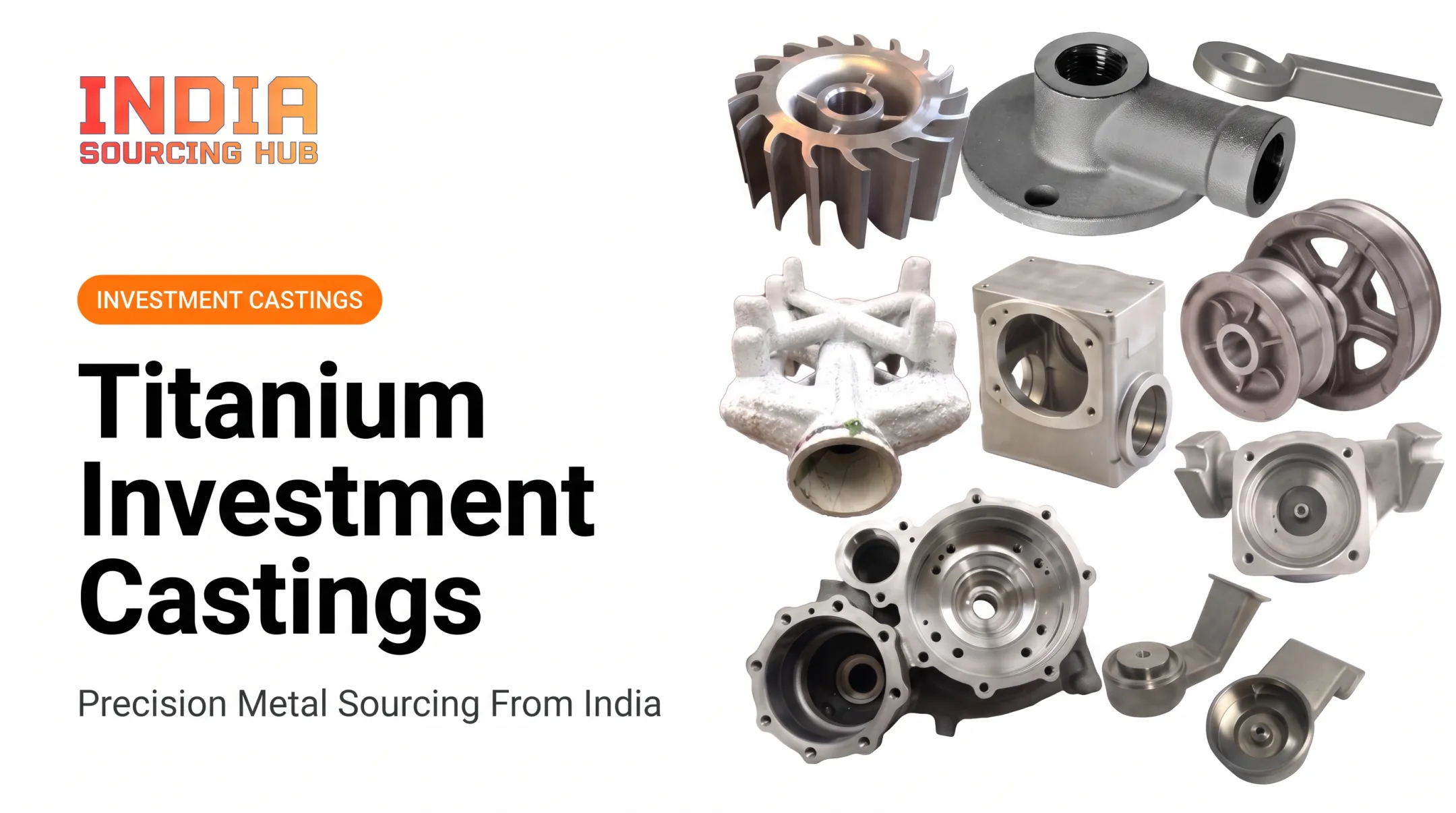
Common investment-cast components include:
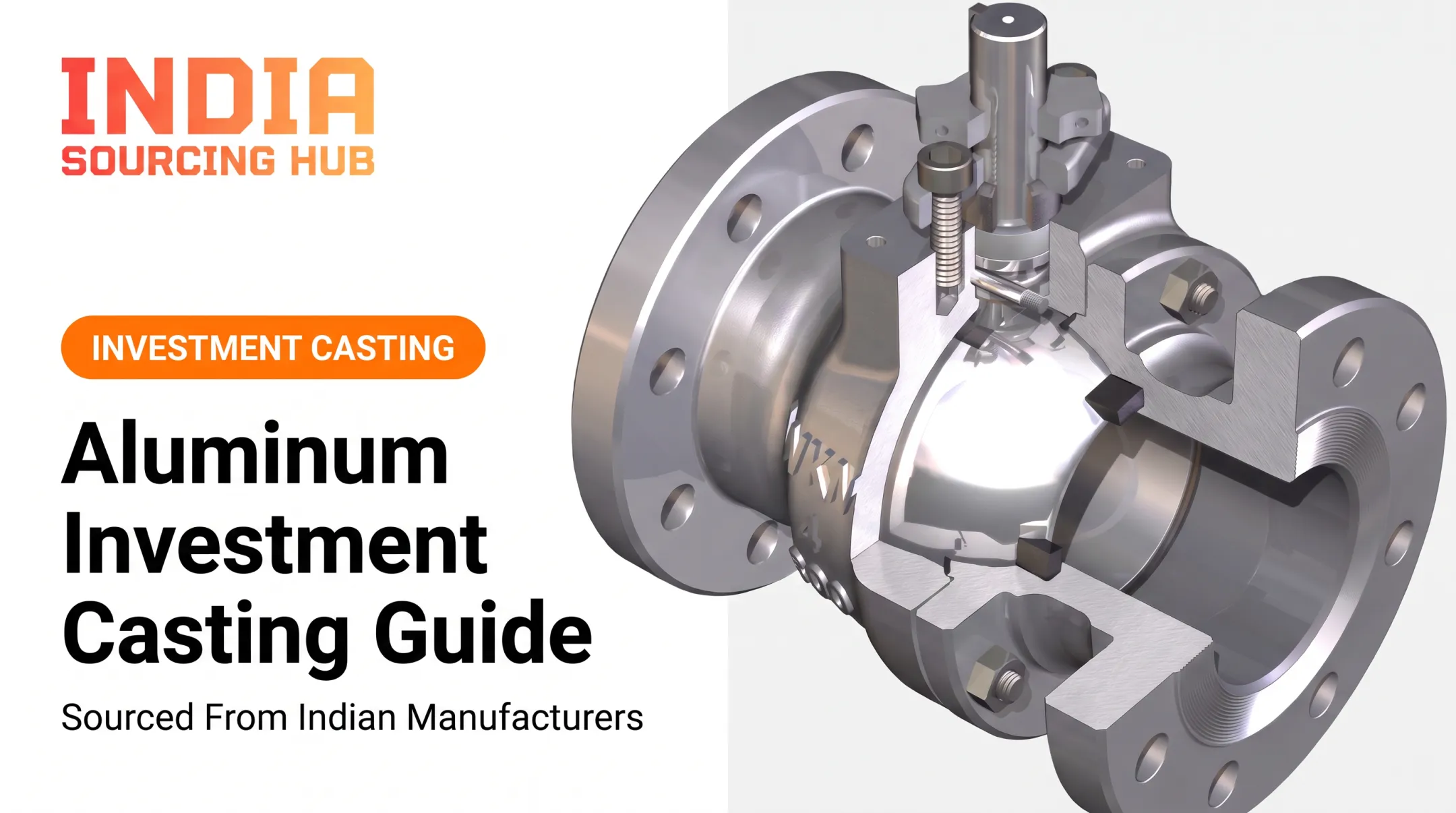
- Fluid handling: pump and valve bodies, impellers, volutes
- Automotive and transportation: brackets, housings, and structural components
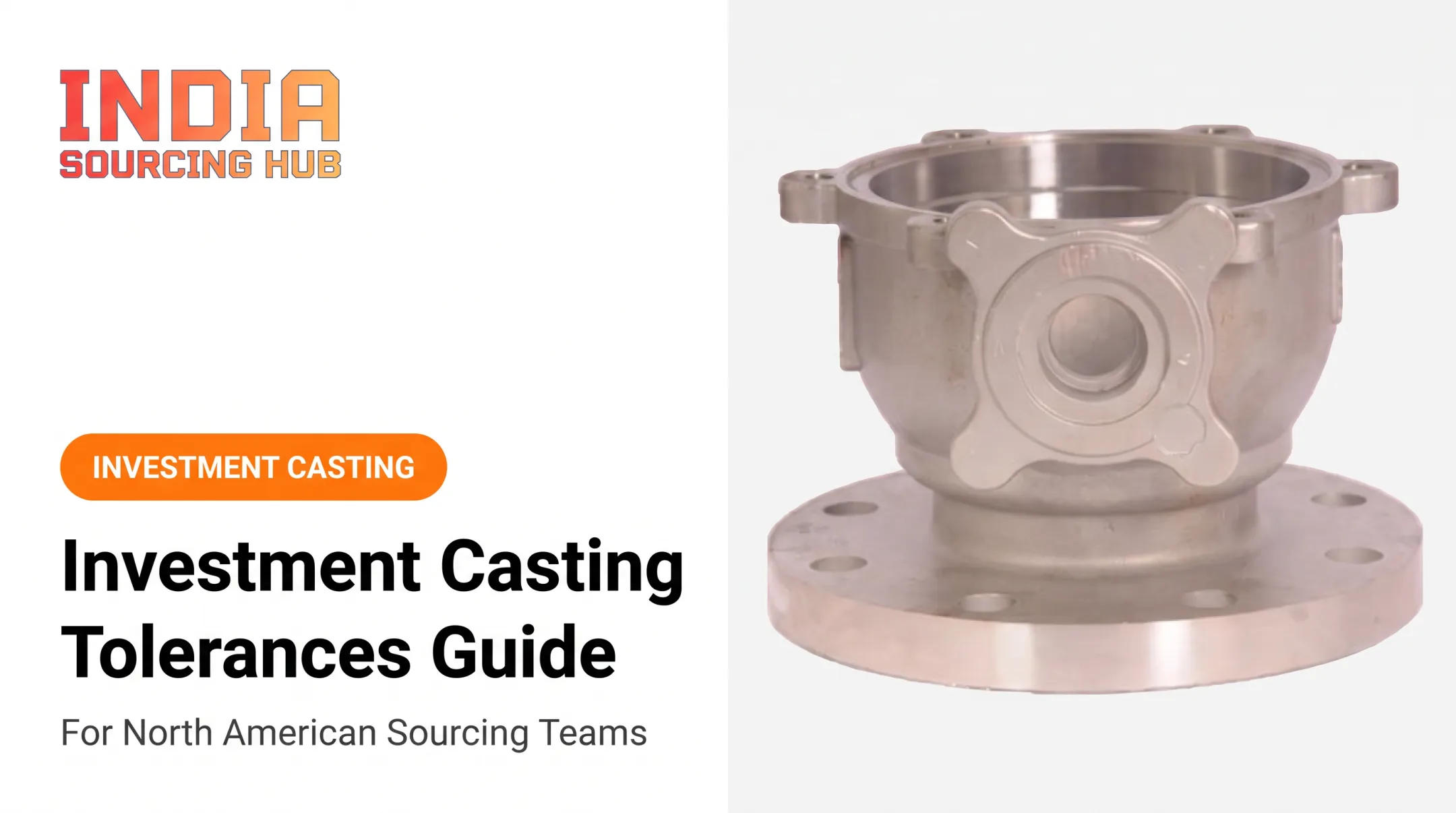
- Energy and industrial equipment: valve stems, valve balls, flanged housings
- General machinery: mounting hardware, complex brackets, and clamps
India Sourcing Hub's Indian factory network, for example, produces investment-cast components in stainless steel, aluminum, brass, special alloys, and iron for customers in water utilities, oil and gas, mining, petrochemicals, and automotive manufacturing.
Not every foundry serves every regulated industry. A shop that casts general industrial valve bodies well may not carry the documentation, traceability, or testing infrastructure that aerospace or medical applications require. Match the supplier's actual quality system and track record to your application, rather than assuming capability from a materials list alone.
Advantages, Limitations, and Design Considerations
Investment casting pays off when geometry, alloy choice, or part consolidation outrun what sand casting, machining from billet, or multi-piece fabrication can do efficiently.
Where Investment Casting Wins
- Produces complex geometries, undercuts, and thin sections in one piece
- Delivers near-net-shape parts, cutting downstream machining
- Reduces part count by consolidating what would otherwise be a multi-piece assembly
- Works across a wide range of alloys
- Delivers repeatable dimensions across production runs
Surface finish and dimensional accuracy show up as practical gains: better sealing on valve bodies, tighter fits on mating surfaces, and less finishing before assembly.
Fictiv's process comparison lists as-cast roughness around 32-63 microinches Ra, though other manufacturer guides report different ranges. Treat any published figure as a general expectation, not a guarantee, and confirm specifics with your foundry.
Where Investment Casting Falls Short
- Higher upfront tooling and setup cost than sand casting
- Longer development cycle while pattern dies are built and proven
- Slower production rate than highly automated processes like die casting
- Practical size and weight ceilings that vary by foundry
- Ceramic shell cracking risk if drying or dewax isn't controlled
- Small holes, deep cavities, and thin walls that need careful process control
Designing for Castability
A design-for-castability review before tooling cuts problems later. Items worth checking:
- Draft angles for pattern release
- Uniform wall sections to control cooling and shrinkage
- Generous radii instead of sharp corners
- Machining allowances on critical surfaces
- Gating locations and core requirements
- Datum strategy and realistic tolerances
Casting tolerance and machined tolerance aren't interchangeable. A casting can hold a reasonable general tolerance across most dimensions, but tight requirements—bore fits, sealing surfaces—may still need machining to meet spec.
Consolidating a multi-piece fabricated design into a single casting can cut welds, leak paths, and alignment issues. That only works when the design respects what casting can actually hold.
Investment Casting Compared With Other Manufacturing Methods
No single process wins every comparison. The right choice depends on geometry, material, volume, size, tolerance, surface finish, and schedule.
Investment Casting vs. Sand Casting
| Factor | Investment Casting | Sand Casting |
|---|---|---|
| Complexity | High — thin walls, undercuts, fine detail | Moderate |
| Surface finish | Smoother as-cast finish | Rougher as-cast finish |
| Tooling cost | Higher | Lower |
| Typical volume | Medium runs | Low to high, including one-offs |
| Part size | Smaller to mid-size parts | Better suited to larger parts |
Sand casting tends to win on large, simpler parts or very low quantities where tooling cost matters most. Investment casting wins when geometry, finish, or tolerance requirements justify the extra tooling investment.
Investment Casting vs. Die Casting
Die casting generally runs non-ferrous alloys (aluminum, zinc) at high volume with fast cycle times. It relies on expensive hardened tooling built for those volumes.
Investment casting handles ferrous and non-ferrous alloys alike and fits medium production runs better. If your part needs a ferrous alloy, die casting typically isn't an option.
Investment Casting vs. Forging and CNC Machining
- Forging suits high-load parts that need directional grain strength (crankshafts, structural brackets) but offers far less freedom for complex shapes.
- CNC machining suits low-volume precision work or features that can't be cast economically, though per-part cost rises at higher volumes.

Getting a Meaningful Comparison
Quotes across processes are only comparable when built from:
- The same drawing revision
- The same alloy specification
- The same inspection plan
- The same packaging and delivery terms
A casting quote and a machining quote built from different assumptions produce a misleading comparison, regardless of which number looks lower.
Investment Casting Cost and Supplier Evaluation
The quoted piece price is one line in a much longer cost equation.
What Drives Investment Casting Cost
- Pattern or die tooling, plus engineering and pattern development
- Wax and ceramic shell processing
- Alloy quantity and melt yield
- Labor for shell building, pouring, and cleaning
- Finishing, heat treatment, and machining
- Inspection, packaging, and freight
- Duties, inventory carrying cost, and rejected or reworked parts
A higher casting price can still produce a lower total landed cost if it cuts machining hours, assembly steps, material waste, inspection burden, or field-failure risk. The cheapest quote on paper isn't always the cheapest part once it reaches your dock.
Tooling Economics
Tooling cost behaves differently depending on volume. Boothroyd Dewhurst's cost-estimating guidance notes that tooling dominates unit cost at 100-500 parts but becomes a small fraction of unit cost once annual volume reaches 10,000 or more.
Expected quantity, part life, repeat-order likelihood, and whether prototypes come first all determine how fast tooling investment pays back.

Supplier Due-Diligence Checklist
Before committing tooling dollars to a supplier, confirm:
- Relevant casting experience with your alloy and part type
- Documented pattern and shell process controls
- Sample approval before production release
- Dimensional inspection capability
- Material traceability and certification
- Non-destructive testing capability, if required
- Corrective-action procedures for nonconforming parts
- Responsive, clear communication
What to Include in Your RFQ
A complete RFQ gives suppliers what they need to quote accurately:
- 3D model and 2D drawing
- Alloy specification
- Annual and initial order quantities
- Critical dimensions and surface requirements
- Machining scope and testing requirements
- Packaging, delivery destination, and required documentation
Supply-Chain Risk for US Buyers
Sourcing castings overseas adds variables beyond the piece price:
- Quality variation between factories
- Unclear ownership of tooling
- Communication gaps across time zones
- Long transit times, customs, and duties
- Minimum order quantities and inventory exposure
A managed sourcing partner can cut that coordination burden by handling import logistics, quality oversight, and North American inventory holding. Due diligence on the actual foundry still matters.
Sourcing Investment-Cast Parts Through India Sourcing Hub
India Sourcing Hub has connected North American manufacturers to overseas metal suppliers since 1995. Since 2013, it has built an Indian factory network vetted to its quality standards, including investment casting suppliers in stainless steel, aluminum, brass, special alloys, and iron.
For US manufacturers evaluating investment-cast parts, that network handles the overseas work that consumes internal time:
- Translating drawings and specifications into supplier discussions
- Coordinating quality expectations, with India-based engineers inspecting production runs before shipment
- Managing import logistics and customs details
- Offering warehousing in Chicago, Toronto, and India to reduce minimum-order-quantity friction
This model fits:
- Pump and valve manufacturers needing impellers, volutes, bodies, stems, or valve balls made to drawing
- Automotive and truck component buyers sourcing cast and machined parts at volume
- Engineering teams who need a trusted overseas source for prototypes that roll into production
- Manufacturers adding an India channel alongside or instead of existing China suppliers
India Sourcing Hub doesn't operate its own casting floor and doesn't claim specific certifications on your behalf. The value is managing the supplier relationship, quality checks, and logistics so your team isn't handling every overseas interaction directly.

If you have a drawing for an investment-cast or cast-machined part, share it with India Sourcing Hub's team to see whether this route fits your volume, quality, and delivery needs.
Frequently Asked Questions
What is investment casting?
Investment casting is a precision metal-forming process that uses a disposable wax pattern surrounded by a ceramic shell. Once the wax is removed and metal is poured in, you get a complex, smooth-surfaced part that often needs little secondary machining.
How does investment casting work?
A wax pattern is built, assembled into a tree, and coated repeatedly with ceramic slurry to form a shell. The wax is then melted out, metal is poured into the hollow shell, and the shell is broken away before finishing and inspection.
Is investment casting the same as lost-wax casting?
Yes. "Lost wax" means the wax pattern is melted out before molten metal fills the ceramic mold—the same process under a different name.
Is investment casting better than sand casting?
Investment casting generally suits smaller, more complex, smoother, and more dimensionally precise parts. Sand casting tends to work better for larger parts, simpler geometries, or lower-budget projects. Choose based on your part’s size, geometry, and tolerance needs.
How much does investment casting cost?
Cost depends on tooling, alloy, part size, complexity, quantity, tolerances, and finishing. Request quotes built from the same drawing and specification for a fair comparison.
What products are made from investment casting?
Common examples include pump and valve components, automotive and truck parts, industrial equipment components, and complex metal hardware. Material, geometry, and quality requirements determine whether a given part is a good fit.